MOQ Cost Impact: How Minimum Order Quantity Changes Your Unit Price

MOQ Cost Impact: How Minimum Order Quantity Changes Your Unit Price
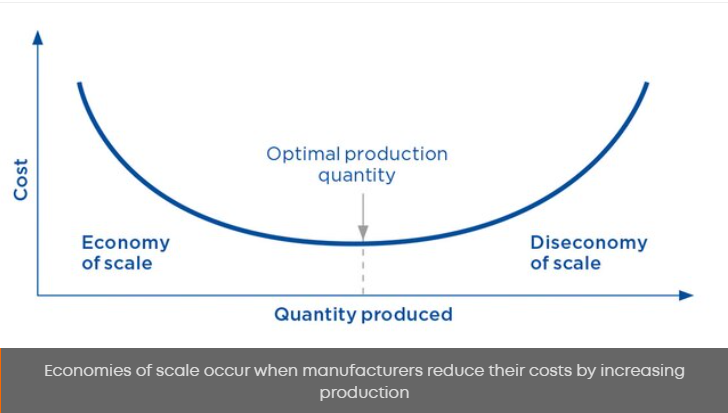
Every buyer knows that ordering more units lowers the per-piece price. What most buyers don't know is that the shape of the price drop is different for every fiber, and the biggest savings don't happen where you think they do.
This article maps the real cost curve for knitted scarves across four MOQ levels — 100, 500, 1000, and 3000 pieces — for acrylic, wool, and cashmere. The numbers explain where to push for a better price and where pushing won't help.
Why MOQ Changes the Price: The Cost You Don't See
Every production run carries costs that don't scale with quantity. These are the setup costs — the things the factory pays once, regardless of whether you order 10 pieces or 10,000:
| Setup Cost | Typical Range | Amortized Over |
|---|---|---|
| Yarn sourcing & procurement | $50–$200 | Entire order (kg) |
| Dye-bath preparation (per color) | $80–$300 | All pieces in that color |
| Machine programming & test knit | $100–$400 | Entire order |
| QC inspection setup | $150–$300 | Entire order |
| Shipping documentation | $50–$100 | Entire order |
At 3000 pieces, these setup costs spread thin — maybe $0.15–$0.30 per scarf. At 100 pieces, they land hard — $5.00–$9.00 per scarf. That's the MOQ penalty in its simplest form.
The Curve: What Happens at Each MOQ Level
Acrylic Scarf — 180 × 30 cm, 12 GG, Solid Color
| MOQ | Yarn /Piece | Labor /Piece | Setup Amortized | Total /Piece | vs 3000 pcs |
|---|---|---|---|---|---|
| 100 pcs | $1.60 | $1.80 | $5.50 | $8.90 | +108% |
| 500 pcs | $1.40 | $1.35 | $1.10 | $3.85 | −10% |
| 1000 pcs | $1.30 | $1.20 | $0.55 | $3.05 | −29% |
| 3000 pcs | $1.15 | $1.10 | $0.18 | $2.43 | 基准 |
Acrylic's steepest savings happen between 100 and 500 pieces — the setup costs crush orders under 300. After 500, the curve flattens. Going from 500 to 1000 saves $0.80/piece. Going from 1000 to 3000 saves only $0.62/piece. The factory's already running efficiently.
Wool — Lambswool Scarf, 180 × 30 cm, 12 GG
| MOQ | Yarn /Piece | Labor /Piece | Setup Amortized | Total /Piece | vs 3000 pcs |
|---|---|---|---|---|---|
| 100 pcs | $6.50 | $1.90 | $5.50 | $13.90 | +74% |
| 500 pcs | $5.00 | $1.45 | $1.10 | $7.55 | −5% |
| 1000 pcs | $4.50 | $1.30 | $0.55 | $6.35 | −20% |
| 3000 pcs | $4.10 | $1.20 | $0.18 | $5.48 | 基准 |
Wool behaves differently from acrylic because the yarn itself is a much larger share of total cost. Setup costs still hurt at 100 pieces, but proportionally less than with acrylic — because the wool yarn cost is already eating most of the budget. The savings between 500 and 3000 are real but not dramatic.
Cashmere — Grade A Scarf, 180 × 30 cm, 12 GG
| MOQ | Yarn /Piece | Labor /Piece | Setup Amortized | Total /Piece | vs 3000 pcs |
|---|---|---|---|---|---|
| 100 pcs | $32.00 | $2.00 | $5.50 | $39.50 | +40% |
| 500 pcs | $27.00 | $1.60 | $1.10 | $29.70 | +5% |
| 1000 pcs | $24.00 | $1.50 | $0.55 | $26.05 | −8% |
| 3000 pcs | $22.00 | $1.40 | $0.18 | $23.58 | 基准 |
Cashmere is the outlier. The raw material dominates the cost so completely that setup costs barely register. The difference between 100 and 3000 pieces is about 40% — much smaller than acrylic's 108%. The MOQ penalty on cashmere is real but muted, because you're buying fiber, not factory time.
Where the Leverage Actually Sits — By Fiber
The MOQ conversation changes depending on what you're buying:
| Fiber | Biggest Savings Window | What to Negotiate | What's Fixed |
|---|---|---|---|
| Acrylic | 100 → 500 pcs | Setup fee waiver; stock yarn instead of custom-dyed | Yarn price barely moves |
| Wool | 100 → 500 pcs | Yarn pre-order timing; accept mill's stock colors | Labor is competitive, don't push here |
| Cashmere | All levels (gradual) | Yarn grade (B vs A); dye-lot consolidation | Setup costs are noise relative to yarn |
The Multi-Color Trap
Everything above assumes a solid-color scarf. Add colors, and the MOQ math changes. Each additional color requires:
- A separate dye bath ($80–$300 setup)
- Separate yarn procurement (minimum per-color kg order from the spinner)
- Machine downtime for color changeover
At 3000 pieces, adding a second color is manageable — the setup costs spread thin. At 100 pieces with three colors, each color might only have 33 pieces. The setup cost per color can exceed the yarn cost per color. A three-color cashmere scarf at 100 pieces? The dye-bath setup alone could be $900, spread over 33 pieces. That's $27 per scarf just to turn on the dye-bath, before a single gram of cashmere enters it.
What Smart Buyers Do at Low MOQ
If you're locked into a small order, there are ways to reduce the penalty without increasing quantity:
- Take stock-service colors. The factory already has these yarns dyed and in inventory. No dye-bath setup, no minimum kg per color from the spinner. This is the single largest cost lever at low MOQ.
- Piggyback on a larger production run. Ask if your order can run on the same machine setup as another customer's order using the same yarn and gauge. You pay for the knitting time, not the setup.
- Consolidate SKUs into fewer styles. If you're ordering 300 total pieces but spread across five different styles, you essentially have five 60-piece orders, each carrying its own setup cost. Combine styles or accept fewer variations.
- Negotiate the setup fee as a separate line item. Some factories will agree to waive or reduce setup fees if you commit to a follow-up order within 6 months. The setup fee becomes a deposit against future business.
The Truth About MOQ Negotiation
Factories don't set MOQs to be difficult. They set them because below a certain volume, the setup cost exceeds the profit on the order. When you ask a factory to drop MOQ from 500 to 100, you're asking them to lose money — or to pass the setup cost to you in the unit price. There's no third path.
The useful conversation isn't "can you lower the MOQ?" It's "what changes if I order 100 instead of 500, and which of those changes can I mitigate?" That's a question a factory engineer can work with.