Why "100% Cashmere" Labels Lie: Blend Ratio Detection Explained

Why "100% Cashmere" Labels Lie: Blend Ratio Detection Explained
Introduction
A label that reads "100% Cashmere" is not a certificate. It is a claim, and claims in the cashmere supply chain are routinely false. Independent market surveys estimate that 30-60% of products sold as "100% cashmere" on major online marketplaces contain significant quantities of cheaper fiber. The fraud is not random: it follows a predictable economic logic, and understanding that logic is the first step toward detecting it.
This article covers how blend ratios are measured, why labels misrepresent them, and what a buyer at any scale can do about it. For the broader context of fiber-level authentication, see our guide on cashmere fiber identification methods.
The Economics of Fiber Fraud
Raw cashmere trades at roughly 5-8 times the price of raw sheep's wool, and 15-20 times the price of acrylic. A scarf that substitutes 30% of its cashmere content with wool reduces raw material cost by approximately 25%, while maintaining a hand feel and appearance close enough to pass casual inspection. A scarf that substitutes 100% of its cashmere with acrylic reduces material cost by over 90%.
The incentives are structural. A factory producing 10,000 scarves per year, with each scarf using 200 grams of fiber, saves roughly $30,000–$50,000 annually by blending 30% wool into material labeled as 100% cashmere. Detection is difficult. Enforcement is rare. The economics of honesty in cashmere labeling, to put it bluntly, do not close on their own.
The Fraud Hierarchy
Cashmere mislabeling follows a ladder of increasing sophistication:
Level 1 — Acrylic substitution. The crudest form. Polyacrylonitrile fiber dyed to match cashmere tones and finished with silicone softeners. Detection: trivial. A burn test catches it in seconds. This fraud targets buyers who have never heard of fiber testing.
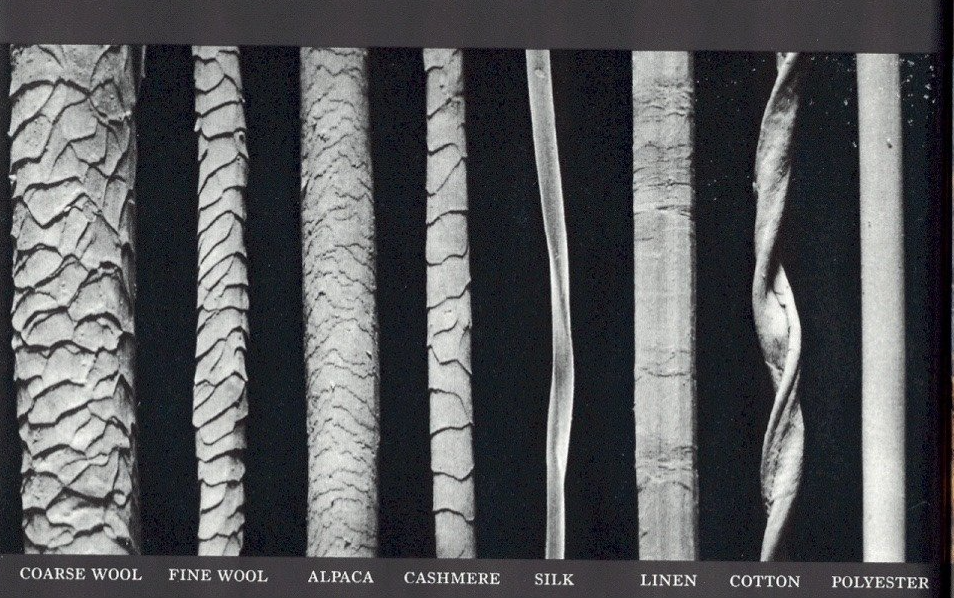
Level 2 — Full wool substitution. Sheep's wool labeled as cashmere. Usually fine wool (19-25 microns) selected to approximate cashmere's softness. Detection: microscopy distinguishes wool from cashmere by scale structure, though superfine merino under 17 microns complicates the picture.
Level 3 — Partial wool blending. A mix of genuine cashmere and wool, labeled as 100% cashmere. Common ratios: 70/30 cashmere-wool, 50/50, or 80/20. This is the most economically rational fraud because it captures real savings while maintaining enough cashmere content to confuse consumer testing. Detection: quantitative microscopy required. A simple "cashmere vs. wool" check will find both fibers present, which is exactly what the fraudster expects.
Level 4 — Grade misrepresentation. Low-grade cashmere (Grade C, 18-19 microns, short fiber length) sold as premium Grade A. The species is correct. The quality is not. Detection: fiber diameter measurement and length analysis, which almost no consumer-level test can perform.
Our lab-grade vs. consumer-grade authentication guide maps which testing tier catches which level of fraud.

How Blend Ratios Are Measured: ISO 17751
The international standard for quantitative cashmere-wool blend analysis is ISO 17751-1:2023. The method is conceptually straightforward and operationally tedious.
A technician prepares a slide with a representative sample of fibers — typically 500 to 1,000 individual fibers — and examines each one under a light microscope at 200-500x magnification. Each fiber is classified as cashmere, wool, or other specialty animal fiber based on scale morphology. The fiber diameter of each classified fiber is also measured. At the end, the technician has a count: X fibers identified as cashmere, Y fibers identified as wool. The blend ratio is calculated by weight using the fiber count and the measured diameter distribution.
The method is accurate to within ±3 percentage points when performed by an experienced technician on an adequately sampled specimen. The limiting factor is sampling: if the fabric is not homogeneous, a single slide may not be representative. A well-made fraudulent blend that concentrates wool fibers in the fabric core, with cashmere on the surface, can deceive a technician who only samples surface fibers.
NIR Spectroscopy: The Emerging Alternative
Near-infrared (NIR) spectroscopy offers a faster, non-destructive approach to blend analysis. A 2024 study published in PMC demonstrated that handheld NIR devices, combined with optimized wavelength selection algorithms, can distinguish cashmere from wool with 97.4% accuracy. A separate 2025 study in the Spectroscopy journal confirmed that handheld NIR technology is a "game-changer" for combating counterfeit cashmere in field settings.
The advantage is speed and objectivity. NIR reads the chemical reflectance signature of a fiber sample in seconds, without requiring a trained microscopist to classify hundreds of individual fibers. The limitation is equipment cost: handheld NIR spectrometers suitable for textile analysis run $5,000-$15,000, putting them out of reach for most individual buyers but well within range for sourcing agents, quality control departments, and serious importers.
For businesses sourcing cashmere scarves at scale, our Sourcing Guide covers how to build NIR verification into the supplier qualification process.
What "100% Cashmere" Legally Means
Legal definitions of "cashmere" vary by jurisdiction, and the variation creates opportunities for creative labeling.
United States: Under the Wool Products Labeling Act and FTC regulations, cashmere is defined as the fine undercoat fiber produced by the cashmere goat (Capra hircus), with an average fiber diameter not exceeding 19 microns. "100% Cashmere" means the product contains nothing else, subject to a tolerance of up to 3% other fibers that may be present incidentally. Crucially, this tolerance is for contamination, not intentional blending.
European Union: EU Regulation 1007/2011 requires clear fiber composition labeling. The term "100% cashmere" can only be used if the product contains exclusively cashmere, with a tolerance of up to 2% for extraneous fibers that are technically unavoidable in good manufacturing practice.
China: GB/T 18132 defines cashmere and specifies testing methods. The standard recognizes multiple quality grades and is the most widely used framework in the global cashmere supply chain, given China's position as the dominant producer. However, enforcement at the retail level varies significantly.
The gap between these legal frameworks and market reality is wide. The FTC brings enforcement actions regularly, but the volume of mislabeled products vastly exceeds regulatory capacity. A label is a starting point for investigation, not a conclusion.

How to Verify Blend Ratio: A Practical Guide
For importers and brands: Commission ISO 17751-1 quantitative analysis from an accredited textile testing laboratory. Request the raw fiber count data, not just the pass/fail result. A report showing 97% cashmere with 3% contamination is materially different from a report showing 82% cashmere with 18% wool, even though both might arrive with a label saying "100% cashmere." If your order size justifies it, invest in a handheld NIR device for rapid incoming inspection.
For small brands and individual buyers: The burn test eliminates Level 1 fraud. Consumer microscopy at 200x gives a qualitative picture: you will see both fiber types if a blend is present. What you will not get is a reliable quantitative ratio. If you see wool fibers on a "100% cashmere" scarf, you know the label is false, even if you cannot determine the exact percentage. Our Quality Guide covers the full incoming inspection workflow.
For consumers: Price is an imperfect but directionally useful signal. At current 2026 raw fiber prices, a 200-gram 100% cashmere scarf has a raw material cost floor of approximately $18-25 before any manufacturing, finishing, or shipping. A retail price below $50 for a "100% cashmere" scarf strongly implies either a blend, commercial-grade material, or a loss-making sale. The price test is probabilistic, not definitive, because any price point can be faked.
The Case for Intentional Blends
Not all cashmere blends are fraudulent. Legitimately labeled blends serve genuine performance purposes. Adding 20-30% merino wool to cashmere improves durability and reduces pilling, because wool's longer fiber length anchors the yarn structure. Adding 10-20% silk increases luster and drape. Adding a small percentage of elastane prevents bagging at stress points. These are legitimate material engineering decisions, and they are labeled honestly.
The distinction is transparency. A scarf labeled "80% Cashmere, 20% Merino Wool" is a product with defined characteristics and a defined price. A scarf labeled "100% Cashmere" that actually contains the same blend is fraud. The fiber is the same; the difference is the lie.
For guidance on evaluating pilling behavior and how fiber composition affects long-term garment performance, see our Pilling Guide.
Technical references: ISO 17751-1:2023; GB/T 18132; EU Regulation 1007/2011; U.S. Wool Products Labeling Act; Zhu et al. (2024) "Near-Infrared Spectroscopy Identification Method of Cashmere and Wool Fibers," PMC; Spectroscopy (2025) "Handheld NIR Technology in Combatting Counterfeit Cashmere."
Looking for verified cashmere scarf suppliers? Source scarves directly from Weave Essence.
Want to see more? Explore the online showroom.
Read more
Cashmere Scarf Origin Tariffs: China vs. Mongolia vs. Italy — HS Codes and Duty Rates Compared
Cashmere Scarf Origin Tariffs: China vs. Mongolia vs. Italy Compared Introduction Two identical cashmere scarves, same fiber grade, same weight, same construction. One lands from China. One lands from Mongolia. The duty bill differs by thousands of dollars per shipment. The origin label on the box, not the fiber inside
2026 Section 301 Scarf Tariffs: Current Rates, Hearing Updates, and Supply Chain Impact
2026 Section 301 Scarf Tariffs: Current Rates, Hearing Updates, and Supply Chain Impact Introduction A scarf landed from China into the United States in May 2026 does not pay a single tariff rate. It pays three. A baseline most-favored-nation (MFN) rate, a Section 301 surcharge from the original Trump-era trade
Scarf Fiber Warmth-to-Weight Ratio: Cashmere vs. Merino vs. Alpaca vs. Acrylic
Scarf Fiber Warmth-to-Weight Ratio: Cashmere, Merino, Alpaca, and Acrylic Compared Introduction Warmth is the primary functional promise of any winter scarf. Yet "warmth" is rarely defined in measurable terms when fibers are compared. A scarf is not warm in the abstract. It is warm at a given weight,

Lab-Grade vs. Consumer-Grade Cashmere Authentication: What Actually Works
Lab-Grade vs. Consumer-Grade Cashmere Authentication: What Actually Works Introduction Not all cashmere authentication methods are created equal. A textile laboratory equipped with scanning electron microscopy and DNA sequencing can identify cashmere with near-certainty. A consumer armed with a smartphone and a lighter faces a significantly wider margin of error. The