Yarn Count (Nm) Explained for Knitwear Buyers

Yarn Count (Nm) Explained for Knitwear Buyers
You want a chunky scarf. Your supplier asks: "What Nm yarn do you want?" You have no idea what that means. This guide explains yarn count in plain English.
Yarn count is simply a measure of yarn thickness. Understanding it helps you specify exactly what you want, compare supplier quotes accurately, and avoid surprises in fabric weight and hand feel.
1. What is Yarn Count?
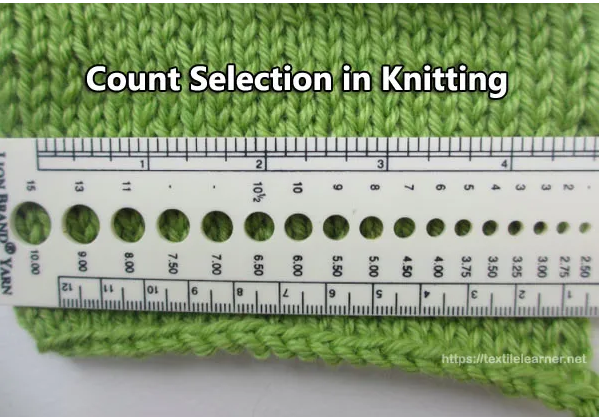
Yarn count tells you how thick or thin a yarn is. Different systems are used around the world. For knitwear, the most common are:
- Nm (Metric Count): Most common for wool, cashmere, and other long-staple fibers. Used in Europe, China, and most international trade.
- Ne (Cotton Count): Used for cotton and cotton-blend yarns. Common in the US and for cotton knitwear.
- Tex: Direct system used for industrial yarns and some technical textiles.
- Denier: Used for silk, synthetic fibers (polyester, nylon).
2. Understanding Nm (Metric Count)
Nm stands for "Metric Count". The definition is simple:
In other words: Higher Nm = thinner yarn. Lower Nm = thicker yarn.
Examples:
- Nm 2/28: 28 kilometers of yarn per kilogram — very fine, lightweight
- Nm 2/12: 12 kilometers per kilogram — medium thickness, everyday scarf
- Nm 2/6: 6 kilometers per kilogram — thick, chunky scarf
- Nm 2/3: 3 kilometers per kilogram — very thick, blanket scarf
Nm 2/28 (thinner yarn) has a higher number than Nm 2/6 (thicker yarn). This confuses many new buyers.
3. Reading Yarn Specifications (The Fraction Format)
Yarn is typically written as a fraction, e.g., 2/28 Nm or 1/12 Nm. Here's what the numbers mean:
First Number (Ply / Number of strands):
- 1/xx: Single-ply yarn. One strand twisted. Softer, less durable, more prone to pilling and spirality.
- 2/xx: Two-ply yarn. Two strands twisted together. More durable, less pilling, more balanced — standard for quality knitwear.
- 3/xx: Three-ply yarn. Even stronger, premium quality, often used for luxury cashmere.
Second Number (Yarn Thickness / Nm count):
- Higher number = thinner yarn
- Lower number = thicker yarn
Examples explained:
- 2/28 Nm: Two-ply yarn, 28km per kg — fine, lightweight. Common for lightweight summer scarves.
- 2/12 Nm: Two-ply yarn, 12km per kg — medium thickness. Most common for everyday scarves.
- 1/8 Nm: Single-ply, 8km per kg — thick, but less durable due to single ply.
- 2/6 Nm: Two-ply, 6km per kg — chunky, thick. Good for winter scarves.
4. Yarn Count vs Fabric Weight (GSM)
Yarn count is not the same as fabric weight (GSM), but they are related.
Relationship:
- Same yarn count + different knitting gauge = different GSM (tighter gauge = higher GSM)
- Different yarn count + same knitting gauge = different GSM (thicker yarn = higher GSM)
Yarn count alone does not guarantee final fabric weight. Always specify target GSM as well.
5. Yarn Count Guide by Product Type
| Product Type | Recommended Yarn (Nm) | Typical GSM | Hand Feel |
|---|---|---|---|
Let me provide that table properly:
Yarn Count Recommendations
| Product Type | Recommended Yarn (Nm) | Typical GSM | Hand Feel |
|---|---|---|---|
I'll present the yarn guide as text:
Yarn Count Recommendations by Product
- Lightweight summer scarf: 2/28 Nm or 2/24 Nm — 180-220 GSM — Light, airy, drapes well
- Everyday scarf (medium weight): 2/16 Nm or 2/12 Nm — 220-300 GSM — Balanced warmth, good drape
- Winter scarf (heavyweight): 2/8 Nm or 2/6 Nm — 300-450 GSM — Substantial, warm, stiffer drape
- Chunky / blanket scarf: 2/4 Nm or 2/3 Nm — 450-600+ GSM — Very thick, heavy, minimal drape
- Fine cashmere scarf (luxury): 2/26 Nm to 2/28 Nm — 200-260 GSM — Very soft, lightweight, warm
- Basic beanie (medium weight): 2/12 Nm — 250-300 GSM — Standard thickness
- Chunky beanie: 2/6 Nm — 350-450 GSM — Thick, warm, statement piece
6. Yarn Count by Fiber Type
For Wool & Cashmere (Nm is standard):
- Fine (spring/summer): 2/28 Nm, 2/24 Nm
- Medium (autumn): 2/16 Nm, 2/14 Nm
- Chunky (winter): 2/8 Nm, 2/6 Nm
For Acrylic & Blends (Nm also common):
- Fine: 2/28 Nm, 2/24 Nm
- Medium: 2/12 Nm, 2/10 Nm
- Chunky: 2/6 Nm, 2/4 Nm
For Cotton (usually Ne, not Nm):
Cotton yarn uses Ne (Cotton Count). Conversion to Nm: Nm = Ne × 1.69
- Ne 20/2 ≈ Nm 34/2 (fine)
- Ne 10/2 ≈ Nm 17/2 (medium)
- Ne 6/2 ≈ Nm 10/2 (chunky)
7. How Ply Affects Quality
The ply number (first number in the fraction) has a major impact on quality and durability:
| Ply | Durability | Pilling Risk | Spirality Risk | Best For |
|---|---|---|---|---|
Let me provide that table clearly:
Ply Comparison
| Ply | Durability | Pilling Risk | Spirality Risk | Best For |
|---|---|---|---|---|
I'll present the ply guide as text:
Ply Comparison
- Single-ply (1/xx): Low durability, high pilling risk, high spirality risk. Best for: Low-cost products, fashion-only pieces, not recommended for everyday wear.
- 2-ply (2/xx): Good durability, low pilling risk, low spirality risk. Best for: Standard quality knitwear, everyday scarves and beanies — most common.
- 3-ply (3/xx): Very high durability, very low pilling, very low spirality. Best for: Premium products, luxury cashmere, high-use items.
8. Converting Between Yarn Count Systems
If your supplier uses a different system, here are approximate conversions:
Ne (Cotton Count) to Nm:
Example: Ne 10/2 × 1.69 = approximately Nm 17/2
Tex to Nm:
Example: Tex 50 = 1000 ÷ 50 = Nm 20
9. Questions to Ask Your Supplier
- ✓ "What yarn count system do you use (Nm, Ne, Tex)?"
- ✓ "What is the exact yarn specification (e.g., 2/12 Nm)?"
- ✓ "Is this single-ply, 2-ply, or 3-ply?"
- ✓ "What is the target GSM at this yarn count?"
- ✓ "Can you provide a yarn sample before bulk production?"
10. Quick Reference Card
- Higher Nm = thinner yarn (Nm 2/28 is fine; Nm 2/6 is chunky)
- 2-ply is standard quality (more durable than single-ply)
- Specify both yarn count AND GSM to ensure correct fabric weight
- For cotton, ask for Ne or converted Nm
Related Guide from Weave Essence
📘 Knitting Basics: A Technical Guide for Buyers (L1)
Need help specifying yarn for your scarf or beanie order? Contact our team →