Customs Documentation Guide for Knitwear Importers

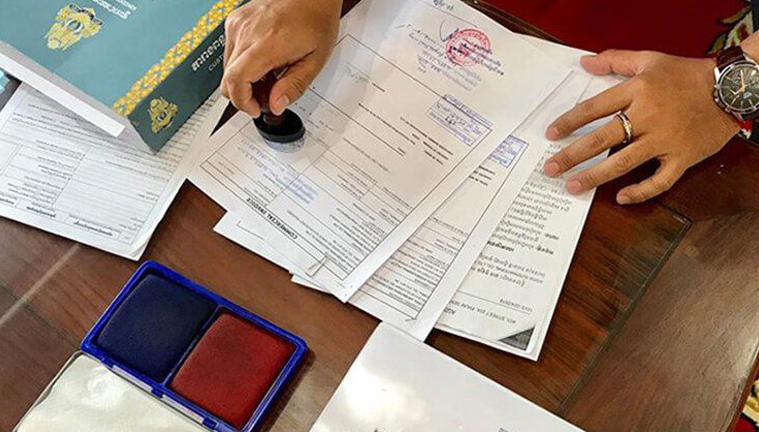
Customs Documentation Guide for Knitwear Importers
Missing documents = customs hold. Incorrect declarations = fines. It's that simple.
This guide covers the essential customs documents for importing knitted scarves and beanies. Use it to ensure smooth clearance, avoid costly delays, and stay compliant with import regulations in your market.
1. What Happens If Documents Are Missing?
- Delays: Shipment sits at port. Storage fees add up daily ($50-200 per day).
- Fines: Customs can penalize for incorrect or missing declarations (10-50% of shipment value).
- Seizure: In extreme cases (false origin claims, prohibited goods), goods can be confiscated.
Bottom line: You, the buyer, are legally responsible for the accuracy of customs declarations, even if you hire a broker.
2. The Three Essential Documents
These three documents are required for every international shipment. Without them, your shipment won't clear.
2.1 Commercial Invoice
The primary document for customs value and duty calculation. Must be accurate and complete.
Required information:
- Seller and buyer name, address, tax ID (EIN/VAT)
- Invoice number and date
- HS code (6-10 digits) for each product
- Product description (fiber content, construction, dimensions)
- Quantity, unit price, total value
- Currency (USD, EUR, etc.)
- Country of origin ("Made in China")
- Incoterm (EXW, FOB, CIF, DDP)
Commercial Invoice Example:
2.2 Packing List
Identifies each carton for inspection. Must match the commercial invoice.
Required information:
- Carton numbers (e.g., 1/10, 2/10...)
- Carton dimensions (length × width × height)
- Gross weight and net weight per carton
- Quantity per carton
- Total number of cartons
- Total gross/net weight
- Total volume (CBM)
2.3 Bill of Lading (B/L)
The contract with the carrier and proof of shipment. Three types:
- Original Bill of Lading: Physical document required for buyer to take possession. Most common for ocean freight.
- Sea Waybill: Electronic, faster, no physical document. Buyer can take possession with ID only.
- Telex Release: Electronic release after original B/L surrendered. Common for L/C transactions.
Required information:
- Shipper (exporter) name and address
- Consignee (buyer) name and address
- Notify party (who to notify when goods arrive)
- Vessel name and voyage number
- Port of loading and port of discharge
- Container number and seal number
- Description of goods (must match commercial invoice)
- "On board" date (date goods loaded on vessel)
3. Certificate of Origin
Whether you need one depends on whether you want to pay reduced duties under a Free Trade Agreement (FTA).
Types of Certificates:
- Generic CO (non-preferential): A statement on your invoice is sufficient. Does not reduce duties.
- Form A (GSP): For preferential rates when importing from China to EU, Japan, Canada, and other GSP countries. Saves money on duties.
- FTA-specific certificate: Required for agreements like USMCA (US-Mexico-Canada), China-Australia FTA, China-Switzerland FTA.
- EUR.1 or EUR-MED: For EU preferential trade agreements (Pan-Euro-Med zone).
4. HS Codes for Knitted Scarves & Beanies
Using the wrong HS code is the most common documentation mistake. Use these codes as a starting point, but verify with your customs broker.
Knitted Scarves:
| Product | HS Code (6-digit) | Notes |
|---|---|---|
Let me provide that table clearly:
HS Codes for Knitted Scarves & Beanies
| Product | HS Code (6-digit) | Notes |
|---|---|---|
I'll present the HS code list as text:
HS Codes for Knitted Scarves & Beanies
- 6117.10: Knitted or crocheted scarves, beanies, and accessories — use this for 90% of knitwear products
- 6214.20: Woven wool or cashmere scarves (not knitted)
- 6214.30: Woven synthetic fiber scarves
- 6214.40: Woven artificial fiber scarves
- 6214.90: Woven cotton or other fiber scarves
Important: A 6-digit HS code is accepted globally, but some countries require 8 or 10 digits. Always verify with your customs broker for your specific country.
5. Compliance Documents by Market
For the European Union:
- OEKO-TEX Standard 100 certificate: Strongly recommended. Proves product safety.
- REACH declaration: Required. Confirms compliance with EU chemical regulations.
- CE marking: For certain personal protective equipment (PPE) scarves/beanies.
- Care labels: Must be in the local language of each EU country.
For the United States:
- FTC fiber content label: Required. Must state fiber percentages.
- RN number (Registered Identification Number): Required for US manufacturers and importers.
- Country of origin label: "Made in China" must be clearly marked on product.
- Children's Product Certificate (CPC): If products are for children under 12, must show lead and phthalate testing.
For the United Kingdom:
- UKCA marking: Replaces CE marking for UK market (England, Scotland, Wales).
- REACH (UK version): Separate from EU REACH.
6. Common Documentation Mistakes
- Wrong HS code: Leads to incorrect duty calculation and potential penalties + audits.
- Missing country of origin: "Made in China" must be on product AND invoice.
- Value discrepancy: If customs finds higher value than declared, expect fines and future audits.
- Missing certificate of origin: Paying higher duties for no reason.
- Inconsistent information: Commercial invoice, packing list, and bill of lading must match exactly.
- Late presentation: Documents presented after the deadline (typically 21 days after shipment).
7. Documents Required for L/C Shipments
When using Letter of Credit, additional documents are typically required:
- Beneficiary's certificate (seller certifying compliance)
- Inspection certificate (if specified)
- Insurance policy (for CIF shipments)
- Forwarder's cargo receipt (for air freight)
8. Complete Importer's Checklist
Use this checklist before every shipment:
- ☐ Commercial invoice (correct HS code, value, origin, Incoterm)
- ☐ Packing list (carton details, weights, dimensions)
- ☐ Bill of lading (sea waybill or original)
- ☐ Certificate of origin (if claiming preferential duty rate)
- ☐ OEKO-TEX certificate (for EU market — strongly recommended)
- ☐ REACH declaration (for EU)
- ☐ FTC labels and RN number (for US)
- ☐ Country of origin marking on product
- ☐ Children's Product Certificate (if applicable)
- ☐ Insurance policy (for CIF shipments)
9. Questions to Ask Your Supplier
- ✓ "Can you provide a commercial invoice with correct HS code and origin?"
- ✓ "Can you provide a detailed packing list with carton weights and dimensions?"
- ✓ "Can you provide a certificate of origin (Form A or FTA-specific)?"
- ✓ "Do you have OEKO-TEX, GOTS, or GRS certificates for compliance?"
- ✓ "Can you provide test reports (fiber composition, color fastness) for this order?"
Related Guide from Weave Essence
📘 Complete Sourcing Guide for Knitted Scarves & Beanies (L1)
Need help with customs documentation for your scarf or beanie order? Contact our team →