The Complete Sourcing Guide for Knitted Scarves & Beanies

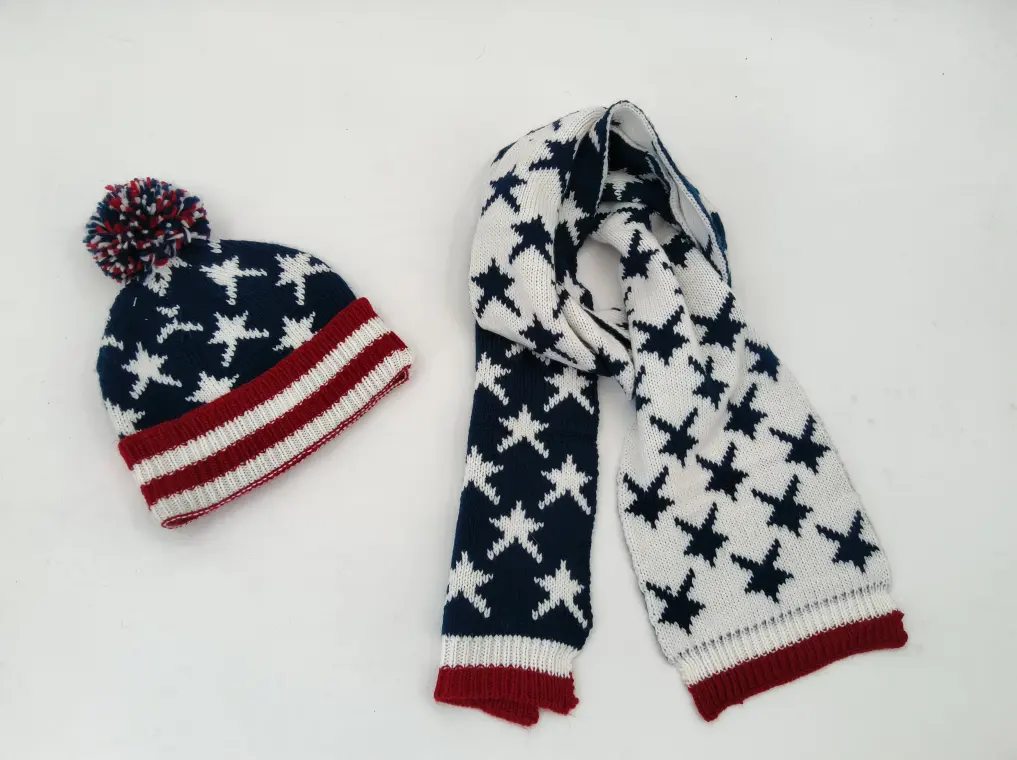
The Complete Sourcing Guide for Knitted Scarves & Beanies
Sourcing knitted scarves and beanies from overseas manufacturers can be challenging. Between quality concerns, communication barriers, and long lead times, even experienced buyers encounter problems.
This guide covers everything you need to know to source successfully — from finding the right factory to managing production and quality control. For a complete quality framework, see our Ultimate Guide to Quality for Knitted Scarves & Beanies. For supplier evaluation, see our 5 Red Flags When Evaluating a Knitting Factory.
1. The Sourcing Framework: Five Key Stages
Every successful sourcing project follows the same five stages:
- Stage 1 — Research: Identify potential factories, verify credentials. Buyer defines requirements, requests quotes.
- Stage 2 — Sampling: Factory develops sample based on your specs. Buyer reviews, tests, approves.
- Stage 3 — Pre-production: Materials ordered, production planned. Buyer approves materials, confirms timeline.
- Stage 4 — Production: Bulk manufacturing. Buyer monitors progress, conducts inspections.
- Stage 5 — Shipment: Packing, inspection, delivery. Buyer approves final inspection, arranges logistics.
Skipping any stage increases risk. Professional buyers allocate 3-5 weeks for sampling and pre-production before bulk production begins.
For sampling guidance, see our Sampling & Lead Time Guide. For quality control, see our Ultimate Guide to Quality for Knitted Scarves & Beanies.
2. Finding and Evaluating Factories
Where to find suppliers: Trade shows (Canton Fair, Texworld), B2B platforms (Alibaba, Global Sources), industry referrals, LinkedIn sourcing groups.
Factory evaluation checklist — five dimensions to verify:
Technical Capability: What knitting machine gauges do they have? (3gg, 5gg, 7gg, 12gg, 14gg+). Do they have in-house finishing? Can they develop from a sketch or only copy samples? For gauge guidance, see our Knitting Gauge (GG) Guide.
Quality System: Do they have incoming yarn inspection? Do they perform first-piece approval? Are inspection records available? For quality standards, see our Ultimate Guide to Quality for Knitted Scarves & Beanies.
Compliance: OEKO-TEX Standard 100 (Class II for adult products). BSCI or SMETA audit (required by many European retailers). Can they provide test reports from accredited labs? For compliance, see our Compliance Guide for Knitted Scarves & Beanies.
Commercial Reliability: On-time delivery rate (ask for references). Payment terms offered (30% deposit is standard). Willingness to provide trade references.
Communication: Clear technical English. Proactive problem identification. Realistic timeline commitments.
For warning signs, see our 5 Red Flags When Evaluating a Knitting Factory.
3. Understanding MOQ (Minimum Order Quantity)
MOQ is the minimum number of units a factory will produce per order. It varies by product type and customization level.
Typical MOQ benchmarks: Solid color, stock yarn: 100-200 pcs. Custom dyed yarn: 200-300 pcs. Jacquard pattern: 300-500 pcs. Cashmere product: 50-100 pcs. Low MOQ program (specialized suppliers): 50-100 pcs.
What drives MOQ: Yarn dyeing minimum batch size (typically 10-20kg per color). Jacquard setup cost amortization. Custom packaging minimum orders. Shipping consolidation (FCL vs LCL).
How to negotiate lower MOQ: Accept stock yarn colors instead of custom dyeing. Choose simpler knitting patterns (rib instead of jacquard). Combine multiple colors into one order. Ask about low MOQ programs.
For detailed MOQ guidance, see our MOQ Guide for Knitted Scarves & Beanies.
4. Sampling Process
Sampling is the most critical stage. Never skip it.
Sample types and timelines: Hand-knitted sample (concept validation): 5-7 days. Lab dip (color confirmation): 3-5 days. Development sample (material, construction): 10-15 days. Production sample (final approval): 10-15 days.
What to verify on samples: Hand feel matches target. Dimensions within tolerance (±2cm length, ±1cm width). Color matches approved standard under D65 light. Ribbing elasticity (should stretch 1.5x and return to shape). Stitch quality (no dropped stitches, uneven tension). Edge finishing (clean, no loose threads).
For detailed sampling guidance, see our Sampling & Lead Time Guide. For quality checks, see our Ultimate Guide to Quality for Knitted Scarves & Beanies.
5. Production Timelines
Standard timeline from order to ready: Sampling: 3-5 weeks. Yarn sourcing (if stock): 5-10 days. Yarn dyeing (if custom): 10-15 days. Knitting production: 15-25 days. Finishing: 5-10 days. Packing and inspection: 5-7 days. Total: 45-75 days.
Peak season considerations (June-October): Dye house queues add 2-4 weeks. Production slots fill 4-6 weeks in advance. Place orders by April for September delivery.
For lead time management, see our Sampling & Lead Time Guide.
6. Payment Terms
Industry standard terms: T/T 30/70 (30% deposit, 70% against shipping documents) — standard for established relationships. T/T 50/50 (50% deposit, 50% balance) — for new suppliers, smaller orders. L/C (letter of credit) — for large orders ($50,000+), new suppliers.
What buyers should know: 30% deposit is standard. Higher deposit = higher risk. Balance payment is typically due after your inspection or against shipping documents. Never pay 100% before production.
For cost planning, see our MOQ Guide for Knitted Scarves & Beanies.
7. Quality Control During Production
Inspection points: Raw material (yarn quality, color, composition). First output (first-piece approval — critical!). During production (in-process checks every 50-100 pieces). Final (pre-shipment inspection with AQL).
AQL standards for scarves and beanies: Critical defects (safety): 0%. Major defects (functional, visible): ≤2.5%. Minor defects (slight cosmetic): ≤4.0%.
For quality control framework, see our Ultimate Guide to Quality for Knitted Scarves & Beanies. For defect identification, see our Fabric Defect Identification Guide.
8. Shipping and Logistics
Common Incoterms: EXW (factory gate only). FOB (to port of loading — standard for China exports). CIF (to destination port). DDP (everything including duties).
Documentation checklist: Commercial invoice (with HS codes, fiber content). Packing list (quantity, weight, carton dimensions). Bill of lading. Certificate of origin (for tariff preference). Test reports (pilling, color fastness, fiber composition). OEKO-TEX certificate (if applicable).
For certification requirements, see our OEKO-TEX Standard 100 Guide and Compliance Guide for Knitted Scarves & Beanies.
9. Common Sourcing Mistakes
- Skipping sample approval: Bulk production with hidden defects. Prevention: Always approve production sample.
- Accepting unrealistic lead times: Delayed delivery, chargeback fees. Prevention: Get written production schedule.
- Not specifying tolerances: Disputes over dimensions. Prevention: Put tolerances in writing. See our Dimensional Tolerance Guide.
- Ignoring certifications: Customs holds, returns. Prevention: Verify certificates before ordering. See our Compliance Guide.
- 100% upfront payment: No leverage if problems arise. Prevention: 30% deposit maximum.
10. Related Resources
- The Ultimate Guide to Quality for Knitted Scarves & Beanies
- 5 Red Flags When Evaluating a Knitting Factory
- MOQ Guide for Knitted Scarves & Beanies
- Sampling & Lead Time Guide
- How to Write a Tech Pack
- Knitting Basics: A Technical Guide for Buyers
- Compliance Guide for Knitted Scarves & Beanies
- OEKO-TEX Standard 100 Guide
This guide is part of our Sourcing Tips series.