UKCA vs CE Marking Guide for Knitted Scarves & Beanies

UKCA vs CE Marking Guide for Knitted Scarves & Beanies
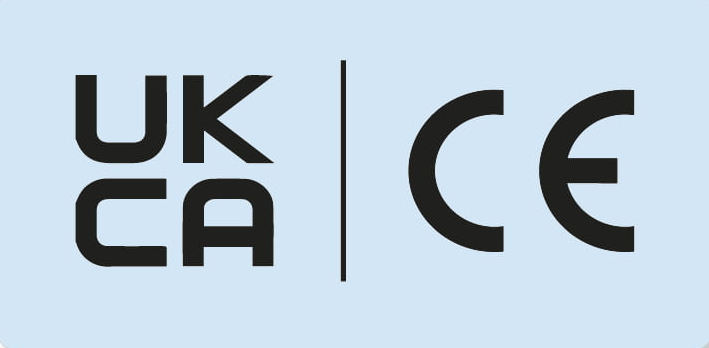
Since Brexit, the United Kingdom has its own product marking regime. CE marking is no longer recognized in Great Britain (England, Scotland, Wales). Northern Ireland is different.
This guide explains the current requirements for UKCA and CE marking for knitted scarves and beanies — which marking to use, transition periods, and steps to comply.
1. What is CE Marking?
CE marking is the EU's product conformity mark. It indicates that a product meets EU safety, health, and environmental protection requirements. For textiles, CE marking is generally NOT required unless the product is classified as Personal Protective Equipment (PPE).
CE marking is NOT required for standard scarves and beanies. It is only required for products covered by specific EU directives (e.g., PPE, toys, electronics). However, understanding CE/UKCA matters for your overall compliance strategy.
2. What is UKCA Marking?
UK Conformity Assessed (UKCA) marking is the post-Brexit UK product conformity mark. It replaces CE marking for products sold in Great Britain (England, Scotland, Wales). UKCA follows similar rules to CE but with UK-specific standards and approved bodies.
UKCA marking became mandatory in Great Britain on January 1, 2023, though transition periods have extended certain flexibilities.
3. Do Scarves & Beanies Need CE or UKCA?
Standard (Non-PPE) Scarves and Beanies:
- CE marking: NOT required. No EU directive applies to standard clothing/textiles.
- UKCA marking: NOT required. No UK regulation requires UKCA for standard clothing/textiles.
When CE/UKCA IS Required:
- PPE scarves/beanies: If product is marketed as protective equipment (e.g., flame-resistant, high-visibility, cold-protection for work), CE (EU) or UKCA (GB) is required.
- Children's products with embedded electronics: If scarf or beanie contains lights, heating elements, or electronics.
- Products with built-in electronics: EMC Directive may apply.
Many buyers still ask for CE/UKCA declarations because they misunderstand the rules. You can explain that standard textiles are not within scope, or provide a voluntary declaration of conformity.
4. For Great Britain (England, Scotland, Wales)
As of January 1, 2025, the rules for selling products in Great Britain are:
Current Requirements:
- UKCA marking is recognized for products that require mandatory marking
- CE marking is NOT generally recognized (except for transitional arrangements)
- Transitional arrangements vary by product category
For standard textiles (non-PPE):
No marking required. Continue using standard textile labeling (fiber content, care, origin).
5. For Northern Ireland
Northern Ireland has a unique status under the Windsor Framework:
- CE marking remains valid for goods placed on the Northern Ireland market
- UKCA marking is also accepted for goods placed on the Northern Ireland market (optional)
- EU rules continue to apply for most product categories
You can use CE or UKCA. Both are accepted. No need for separate Northern Ireland labeling.
6. For the European Union (27 Member States)
For products sold in the EU:
- CE marking remains valid for products requiring mandatory marking
- UKCA marking is NOT recognized in the EU
- For standard textiles: no marking required
7. Transition Periods & Key Dates
Let me provide that table clearly:
UKCA/CE Transition Timeline
| Date | What Happened / Will Happen | Impact on Textiles |
|---|---|---|
I'll present the timeline as text:
Key Dates for UKCA/CE Marking
- January 1, 2021: Brexit effective. UKCA introduced. Transition period began.
- January 1, 2023: UKCA mandatory date (postponed from 2022). CE still accepted in Great Britain during transition.
- December 31, 2024: CE acceptance in Great Britain ended for most products (subject to ongoing flexibilities).
- Present (2025-2026): UK Government continues to review and extend transition allowances for certain product categories.
8. For PPE Scarves & Beanies
If your scarf or beanie is sold as Personal Protective Equipment (e.g., flame-resistant, high-visibility, cold-protection for workplaces), both CE and UKCA marking may be required depending on market.
For EU Market
- CE marking required under PPE Regulation (EU 2016/425)
- Must be certified by an EU Notified Body (for Category II and III PPE)
- Technical file must be maintained
For Great Britain Market
- UKCA marking required under UK PPE Regulations 2018 (as amended)
- Must be certified by a UK Approved Body
- CE marking alone no longer sufficient (except transitional arrangements)
For Northern Ireland Market
- CE marking or UKNI marking required under EU PPE Regulation (via Windsor Framework)
Separate conformity assessment required for each market (EU and GB). UK Approved Body certification does not work for EU; EU Notified Body certification does not work for GB.
9. Documentation Requirements (Non-PPE Textiles)
Even though standard scarves and beanies don't require CE/UKCA marking, you may still need:
- Declaration of Conformity: Voluntary statement that product meets relevant safety standards (e.g., REACH, GPSD/General Product Safety Regulation)
- Technical file: Product specifications, test reports, risk assessment (for General Product Safety Regulation)
- Labeling: Standard FTC (US) or EU labeling requirements still apply (fiber content, care, origin, size)
10. If a Buyer Asks for CE/UKCA Declaration for Standard Textiles
Some buyers mistakenly require CE/UKCA for standard scarves. Here's how to respond:
- Option 1 (Correct explanation): "CE/UKCA marking does not apply to standard textiles. Our products comply with REACH (EU) and GPSD/General Product Safety Regulation, which are the applicable regulations. We can provide a Declaration of Conformity to these standards."
- Option 2 (Voluntary declaration): Provide a voluntary Declaration of Conformity stating the product meets GPSD (EU) or General Product Safety Regulation (UK) requirements.
11. Practical Recommendations
- For standard scarves and beanies: No CE or UKCA marking needed. Focus on textile labeling (fiber content, care, origin).
- For PPE products: Seek expert guidance. Conformity assessment is complex.
- Stay current: UKCA transition rules evolve. Check gov.uk before exporting to Great Britain.
- For EU-only sales: Ignore UKCA. CE marking not required for standard textiles.
- For UK-only sales: UKCA may not be required for standard textiles. Verify current rules.
- For both EU and UK: Consider separate documentation strategies if you sell PPE. For standard textiles, same labeling works for both.
12. Buyer's Checklist
- ☐ Determine if product is PPE or standard textile
- ☐ If PPE: Identify required markings for each target market (CE for EU, UKCA for GB)
- ☐ If standard textile: No CE/UKCA marking needed
- ☐ Verify current UKCA transition rules before shipping to Great Britain
- ☐ For Northern Ireland: CE or UKCA both accepted
- ☐ Maintain Declaration of Conformity to GPSD/General Product Safety Regulation if requested
13. Questions to Ask Your Supplier
- ✓ "Is this product classified as Personal Protective Equipment?"
- ✓ "If PPE, do you have CE or UKCA certification from an approved body?"
- ✓ "Can you provide a Declaration of Conformity to GPSD/General Product Safety Regulation?"
- ✓ "Are you tracking UKCA transition deadlines for products sold to Great Britain?"
Related Guide from Weave Essence
📘 Complete Compliance Guide for Knitted Scarves & Beanies (L1)
Need help with UKCA or CE compliance for your scarf or beanie order? Contact our team →