Air Freight Volatility: How 8% Smaller Volume Saves Buyer Bonus

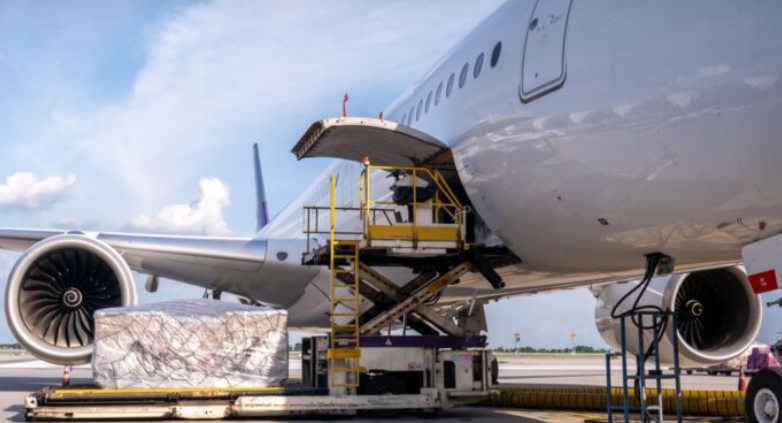
Air freight volatility: why 8% smaller volume saves your bonus (and how to get it)
Freight rates in 2026 are unpredictable. One month, air freight from Shanghai to London is $5.50/kg. The next month, it's $8.20/kg. That volatility doesn't just affect your margin — it directly hits your buyer bonus.
Most buyers focus on product cost and MOQ. But the freight line item is often the difference between hitting your P&L target and missing it. This guide shows you exactly how 8% volume reduction translates into bonus dollars, plus negotiation scripts to get suppliers to care about dimensional weight.
1. Why freight volatility is a buyer's problem
When freight rates spike, the cost increase either eats your margin or forces a retail price increase. Most retailers won't accept mid‑season price hikes. So the margin compression lands on you.
- If you're a brand buyer: Air freight overages come out of your open‑to‑buy or your margin target. Either way, your bonus calculation takes the hit.
- If you're a retailer buyer: Markdowns eat margin. Freight overages eat margin. You can only manage one P&L. Freight is the hidden line item that kills bonuses.
For foundational shipping terms, see our Incoterms guide.
2. The 8% rule: how volume reduction saves real money
Dimensional weight (DIM weight) is designed to penalize light, bulky shipments. Scarves are light — so DIM weight almost always exceeds actual weight. Reducing volume by 8% reduces DIM weight by 8%. That's a direct freight cost reduction.
Example: 5,000 wool scarves. Actual weight: 1,100kg. Flat‑fold DIM weight: 1,550kg. After compressing volume by 8%, new DIM weight: 1,426kg. Saving: 124kg × $7.50/kg = $930 saved. On a 10,000‑unit annual order, savings exceed $1,800.
3. Packing methods ranked by volume efficiency
Not all packing methods are equal. Below is the buyer's reference for volume per 1,000 scarves.
| Packing method | Volume per 1,000 scarves (m³) | DIM weight (kg) | Freight cost@$7.5/kg | Savings vs flat fold |
|---|---|---|---|---|
| ★★★★★ | ★★★★★ | ★★★★★ | ★★★★★ | ★★★★★ |
| ★★★★★ | ★★★★★ | ★★★★★ | ★★★★★ | ★★★★★ |
| ★★★★★ | ★★★★★ | ★★★★★ | ★★★★★ | ★★★★★ |
4. Bonus impact simulation: 8% across your total volume
Let's model the annual impact for a buyer managing 50,000 scarves per year (typical for a mid‑size retailer or DTC brand).
| Scenario | Annual scarf volume | Avg DIM weight per 1k | Total annual DIM weight | Freight cost@$7.5/kg |
|---|---|---|---|---|
| ★★★★★ | ★★★★★ | ★★★★★ | ★★★★★ | ★★★★★ |
Annual freight saving from 8% volume reduction: $14,200. If your bonus is 15% of freight cost savings, that's $2,130 extra in your pocket — without selling one additional scarf.
5. Negotiation script: getting suppliers to care about DIM weight
Most factories don't think about DIM weight unless you push them. Here's a script to use during vendor negotiations.
Add a financial incentive: "For vendors who consistently achieve ≥10% volume reduction, we will prioritize larger order allocations and faster payment terms." Use your leverage. For broader negotiation tactics, see our Sourcing Guide.
6. When vacuum packing makes sense (and when it doesn't)
Vacuum packing reduces volume by 18–25%, which maximizes freight savings. But it has trade‑offs.
- Pros: Maximum volume reduction, best for air freight emergency shipments.
- Cons: Adds $0.30–0.60 per scarf for vacuum bag + labor. Can create temporary creases that need steaming.
- Best use case: High‑value cashmere, long‑distance air freight, shipments larger than 2,000 pieces.
- Worst use case: Low‑cost acrylic scarves, sea freight, orders under 500 pieces (fixed cost per bag too high).
For most buyers, roll packing + compression bands (8–12% reduction) is the sweet spot between savings and simplicity.
7. How to track freight savings for your bonus calculation
You cannot claim credit for savings you don't measure. Set up a simple tracker.
- Column A: Shipment ID
- Column B: Standard DIM weight (flat fold baseline)
- Column C: Actual DIM weight (with compression)
- Column D: Freight rate per kg
- Column E: Savings = (B‑C) × D
Sum column E quarterly. Present the number in your performance review. If your bonus is tied to cost savings, this is quantifiable proof of your impact. For supply chain mapping, see our supply chain mapping guide.
8. Buyer's checklist: protect your bonus from freight volatility
- ☐ Calculate the current DIM weight vs actual weight gap for your top 5 scarf SKUs
- ☐ Quantify the annual bonus impact of 8% volume reduction
- ☐ Add DIM weight clause to all new POs (see script above)
- ☐ Test roll packing + compression on your next air shipment
- ☐ Set up a freight savings tracker (shared with finance)
- ☐ Include freight savings in your next performance review presentation
- ☐ Review bonus calculation structure with your manager — is freight margin included?
Need help calculating your freight savings potential or negotiating DIM weight terms? → Contact Weave Essence sourcing desk