Heavy-Duty Cashmere Sourcing: 300g+ Scarf Guide for Buyers During Cold Snaps

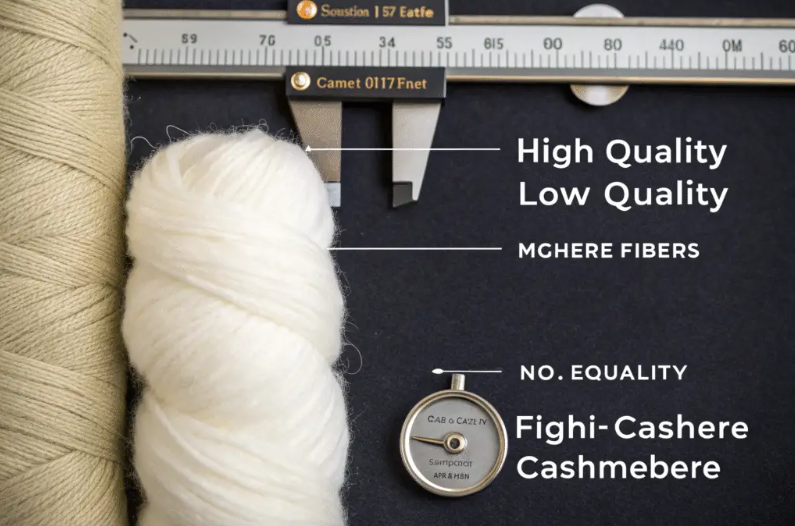
Heavy‑duty cashmere sourcing: 300g+ scarves for sudden cold snaps
Lightweight cashmere blends (180–220g) sell out fast when temperatures drop unexpectedly. But replacing them with equally lightweight stock is a mistake. Customers in a cold snap want heavy‑duty cashmere — scarves that feel substantial, warm, and worth the price.
This guide gives you the technical parameters, supplier criteria, and purchase order tactics to source 300g+ cashmere scarves under urgent timelines. For a broader foundation on sustainable cashmere sourcing, refer to our main material guide.
1. Gram‑weight cheat sheet: when 200g is not enough
Grammage directly correlates with perceived warmth. Below is the buyer’s reference for scarf weight classification. You can also cross‑reference with our fabric weight (GSM) guide for detailed lab procedures.
| Fabric weight (GSM) | Typical scarf weight (150cm length) | Customer perception | Suitable for |
|---|---|---|---|
| 180–220 GSM | 120–160g | “Lightweight, indoor” | Office, layering, mild autumn |
| 230–280 GSM | 170–230g | “Everyday winter” | Core range, standard winter |
| 290–340 GSM | 240–290g | “Substantial, warm” | Cold weather, commuter |
| 350–420+ GSM | 300–380g | “Heavy‑duty, premium” | Sub‑zero, outdoor retail, luxury |
2. Yarn construction: 2‑ply vs 3‑ply for heavy feel
Weight alone is not enough. Yarn ply and twist level determine how dense the fabric feels. For an introduction to yarn count systems, see yarn count (Nm) explained.
- 2/24 Nm or 2/26 Nm – standard lightweight, unsuitable for heavy‑duty.
- 2/16 Nm or 2/14 Nm – thicker yarn, ideal for 280–350g scarves.
- 3/16 Nm or 3/14 Nm – 3‑ply construction, produces dense, warm fabric without excessive weight.
For cold snap buying, prioritize 2/16 Nm or 3‑ply. The extra ply adds thermal insulation without requiring a full re‑engineering of your design.
3. Machine gauge (GG) impact on fabric density
Knitting gauge (GG) determines stitch density. Lower GG = thicker needles = heavier fabric.
- 7 GG – chunky, heavy fabric, ideal for 350g+ scarves.
- 9 GG – balanced density, suitable for 280–350g.
- 12 GG – finer, still acceptable for 250–300g but not “heavy‑duty”.
- 14 GG and above – lightweight construction, avoid for cold snap.
Specify 9 GG or lower in your technical pack when requesting heavy‑duty samples.
4. Vendor shortlist: who can deliver heavy cashmere fast?
Not every factory keeps bulky yarn inventory or open production slots for heavy gauge. Based on emergency buying patterns, these supplier profiles respond fastest:
- Vertically integrated mills – control yarn supply, can switch to heavier counts without external yarn sourcing delays.
- Factories running 7–9 GG machines as standard – no machine conversion time.
- Mills with pre‑spun heavy cashmere yarn inventory – usually Inner Mongolia and Ningxia suppliers who stock 2/16 Nm and 2/14 Nm cones for urgent top‑ups.
Regions with established heavy cashmere capacity: Inner Mongolia (China), Ningxia, and selective mills in Ulaanbaatar (Mongolia).
5. Emergency PO clauses for cold‑snap buying
Standard purchase orders fail during urgent demand. Add these three clauses to protect your timeline and budget:
- “Air freight ready within 10 working days from lab dip approval.” – Forces capacity reservation.
- “Yarn count: minimum 2/16 Nm or 3‑ply equivalent. Fine gauge (higher than 12 GG) prohibited.” – Eliminates lightweight substitutes.
- “Packaging compression ratio ≤1.2 : 1. Dimensional weight calculation to be shared pre‑shipment.” – Protects air freight budget.
6. Color and finishing for heavy‑duty cashmere
Heavy construction doesn’t mean dull. Use these techniques to maintain visual appeal:
- Brushed finish – softens the dense surface, adds a halo effect that customers perceive as luxury.
- Pigment dye or garment dye – creates depth on heavy knits, makes the fabric look intentionally substantial.
- Pop‑color yarn dyeing – works well on 9GG heavy cashmere; deep saturation hides the density and emphasizes color.
Avoid over‑finishing (excessive silicone softeners) that can flatten the heavy structure. If you need color guidance, our seasonal trend guide covers upcoming palettes.
7. Lead time realities for 300g+ cashmere
Heavy cashmere requires more spinning time and slower knitting speeds. Expect:
- Yarn spinning (heavy counts): 15–20 days (vs 10–12 for lightweight)
- Knitting (7–9 GG): 10–15 days (vs 5–7 for fine gauge)
- Finishing + packing: 7–10 days
- Total ex‑works lead time: 35–45 days for standard orders, 25–30 for expedited (with premium)
During a cold snap, prioritize factories with pre‑spun heavy yarn to cut spinning time entirely.
8. Dimensional weight: your hidden cost lever
Heavy scarves take up volume. Air freight is charged by dimensional weight (L×W×H/5000 for cm). Detailed freight considerations are also covered in shipping & incoterms cost guide.
- Standard folding: high volume, expensive freight.
- Roll packing + compression bag: reduces volume by 8–12%.
- Vacuum packing: reduces volume by 15–20%, but requires customer education for unpacking.
Request a volume‑weight comparison sheet from your vendor before finalizing packing method. The 8% difference goes directly to your margin.
Buyer’s checklist for heavy‑duty cashmere sourcing
- ☐ Confirm target grammage (300g+ is the minimum for “heavy” perception)
- ☐ Specify yarn count (2/16 Nm or thicker, or 3‑ply)
- ☐ Require 9 GG or lower knitting gauge
- ☐ Ask for factory’s heavy cashmere reference order (proof of capability)
- ☐ Add emergency PO clauses (air freight ready, compression commitment)
- ☐ Request volume‑weight comparison sheet before production
- ☐ Confirm finish (brushed, not over‑softened)