Fabric Weight (GSM) Guide for Knitted Scarves & Beanies

Fabric Weight (GSM) Guide for Knitted Scarves & Beanies
Fabric weight is one of the most important specifications in any tech pack. It directly affects the feel, warmth, drape, and perceived quality of knitted scarves and beanies — as well as the cost.
This guide explains GSM (grams per square meter), how to measure it, typical ranges by product type, and how to specify it correctly. For a complete quality framework, see our Ultimate Guide to Quality for Knitted Scarves & Beanies.
1. What Is GSM?
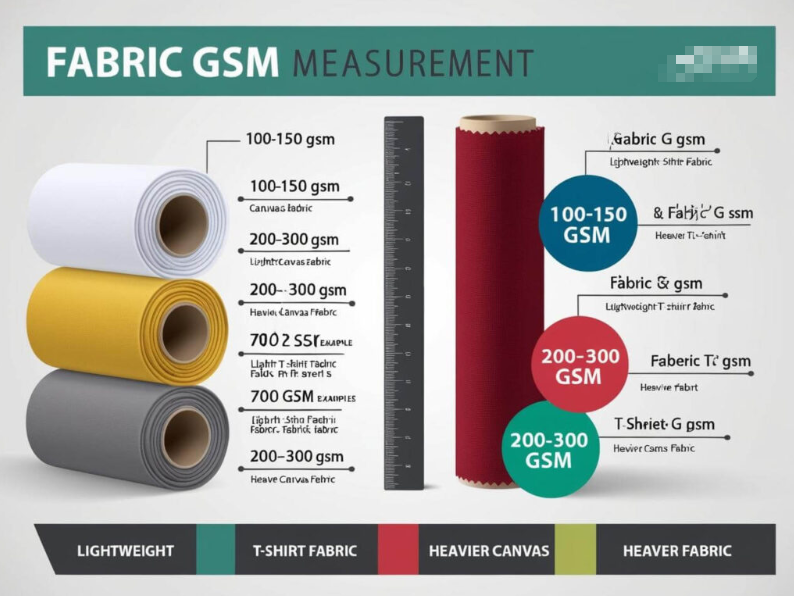
GSM stands for Grams per Square Meter. It is the metric unit of fabric weight — the weight in grams of one square meter of fabric.
What GSM tells you:
- Higher GSM = heavier, thicker, warmer fabric
- Lower GSM = lighter, thinner, cooler fabric
For buyers: GSM is the single best indicator of how a scarf or beanie will feel and perform. Two scarves made from the same fiber can feel completely different if the GSM is different.
For yarn count guidance, see our Yarn Count (Nm) Explained guide.
2. GSM Ranges by Product Type
Knitted Scarves
- Ultra-lightweight (60-120 GSM): Summer scarves, fashion accessories, very thin, sheer, drapes well, cool.
- Lightweight (120-180 GSM): Transitional scarves (spring/autumn), light warmth, balanced drape, comfortable.
- Medium weight (180-250 GSM): Standard winter scarves, good warmth, substantial feel, durable.
- Heavyweight (250-350 GSM): Chunky winter scarves, very warm, thick, statement piece.
- Ultra-heavyweight (350-500+ GSM): Blanket scarves, extreme warmth, very thick, heavy.
Knitted Beanies
- Lightweight (180-220 GSM): Spring/autumn beanies, fine gauge, breathable.
- Medium weight (220-280 GSM): Standard winter beanies, balanced warmth, everyday wear.
- Heavyweight (280-350 GSM): Chunky winter beanies, very warm, thick, casual.
- Ultra-heavyweight (350-450+ GSM): Extreme cold beanies, very thick, heavy.
For seasonal guidance, see our Seasonal Trend Guide.
3. GSM by Fiber Type
Typical GSM for Different Fibers
- Cashmere: 180-260 GSM (lighter weight for same warmth as wool)
- Merino wool: 200-300 GSM
- Standard wool: 220-350 GSM
- Cotton: 120-220 GSM
- Linen: 100-180 GSM
- Acrylic: 200-320 GSM
- Recycled polyester: 180-280 GSM
- Alpaca: 180-260 GSM
Note: Cashmere feels warmer than wool at the same GSM, so premium cashmere scarves often use lighter GSM (180-220) for the same warmth as heavier wool.
For sustainable material guidance, see our Sustainable Materials Guide.
4. How GSM Affects Product Characteristics
Warmth
- Higher GSM = more yarn = more trapped air = warmer
- Cashmere and alpaca are exceptions — they feel warmer at lower GSM
Drape
- Lower GSM = more drape, softer fall, more fluid
- Higher GSM = stiffer drape, more body, more structure
Durability
- Higher GSM generally = more durable (more yarn to wear through)
- But very high GSM can be heavy and may stretch under its own weight
Cost
- Higher GSM = more yarn = higher raw material cost
- Premium fibers (cashmere) at high GSM are significantly more expensive
For cost analysis, see our Cost Breakdown Guide.
5. How to Measure GSM
Professional Method (ISO 3801 / ASTM D3776)
- Cut a fabric sample using a circular cutter that cuts exactly 100 cm² (10cm × 10cm)
- Weigh the sample on a precision scale (accurate to 0.01g)
- Multiply weight by 100 to get GSM
- Measure at 5 different locations, average the results
Simple Method (Without Professional Cutter)
- Cut a 10cm × 10cm square of fabric using a ruler and scissors
- Weigh the sample on a precision scale
- Multiply weight by 100 to get GSM
- Note: This method is less accurate than using a circular cutter
Measurement Conditions
- Condition samples at 65% RH, 20°C for 24 hours before weighing
- Moisture content affects weight — measure under standard conditions
- Measure after finishing, not before
For measurement guidance, see our Dimensional Tolerance Guide.
6. GSM Tolerances
No fabric is perfectly uniform. Specify acceptable GSM tolerance in your tech pack.
Standard Tolerances
- Standard commercial: ±5%
- Premium: ±3%
- Entry-level: ±7%
Example
- Target GSM: 220
- Standard tolerance: 209-231 GSM (±5%)
- Premium tolerance: 213-227 GSM (±3%)
What happens outside tolerance: Fabric is too light (feels cheap) or too heavy (costs more, may be too thick).
For dimensional guidance, see our Dimensional Tolerance Guide.
7. Factors That Affect GSM
Yarn Count
- Finer yarn (higher Nm) produces lower GSM at same stitch density
- Thicker yarn (lower Nm) produces higher GSM
Knit Structure
- Jersey (plain knit): Lowest GSM for given yarn
- Rib: 20-40% higher GSM than jersey
- Cable: 40-60% higher GSM than jersey
- Jacquard: 10-30% higher GSM (depends on pattern)
Gauge
- Higher gauge (finer knit) produces lower GSM
- Lower gauge (chunky knit) produces higher GSM
Finishing
- Milling (fulling) increases GSM (5-20%)
- Raising/napping increases GSM slightly
- Heat setting may change GSM (typically decreases)
For knit structure guidance, see our Knit Structures Guide. For gauge guidance, see our Knitting Gauge (GG) Guide.
8. How to Specify GSM in Your Tech Pack
Complete GSM Specification Example
FABRIC WEIGHT SPECIFICATION
- Target GSM: 220 g/m²
- Tolerance: ±5% (standard) or ±3% (premium)
- Test method: ISO 3801
- Measurement condition: After finishing, conditioned at 65% RH, 20°C for 24 hours
- Sample size: 5 samples per batch, average reported
Questions to Ask Your Supplier
- What is your target GSM for this product?
- What tolerance do you work to?
- Do you measure GSM during production?
- Can you provide GSM test reports?
- Do you measure before or after finishing?
For supplier evaluation, see our 5 Red Flags When Evaluating a Knitting Factory.
9. GSM and Cost Correlation
Example: Cashmere Scarf
- 180 GSM: $28 per unit (light, less yarn)
- 220 GSM: $32 per unit (standard)
- 260 GSM: $38 per unit (heavy, more yarn)
Key insight: Every 10 GSM increase adds approximately 4-5% to raw material cost.
For cost analysis, see our Cost Breakdown Guide.
10. Common GSM Mistakes
- No tolerance specified: Factory can ship 190 GSM as "approximately 200" — specify tolerance
- Measuring before finishing: Finishing changes GSM — specify "after finishing"
- No conditioning: Moisture changes weight — specify conditioned measurement
- Single sample: Fabric varies — specify multiple samples, average reported
- Ignoring GSM for sample approval: Sample may be different GSM than bulk — verify GSM on production sample
For quality guidance, see our Ultimate Guide to Quality for Knitted Scarves & Beanies.
11. Buyer's GSM Checklist
- Specify target GSM and tolerance in tech pack
- Specify test method (ISO 3801 or ASTM D3776)
- Specify measurement conditions (conditioned, after finishing)
- Request GSM test reports for each batch
- Verify GSM on production sample before bulk
12. Related Resources
- The Ultimate Guide to Quality for Knitted Scarves & Beanies
- Yarn Count (Nm) Explained
- Knitting Gauge (GG) Guide
- Knit Structures Guide
- Dimensional Tolerance Guide
- Cost Breakdown Guide
- Sustainable Materials Guide
- How to Write a Tech Pack
This guide is part of our Quality Guide series.