Yarn Count (Nm) Explained: A Buyer's Guide to Knitted Products

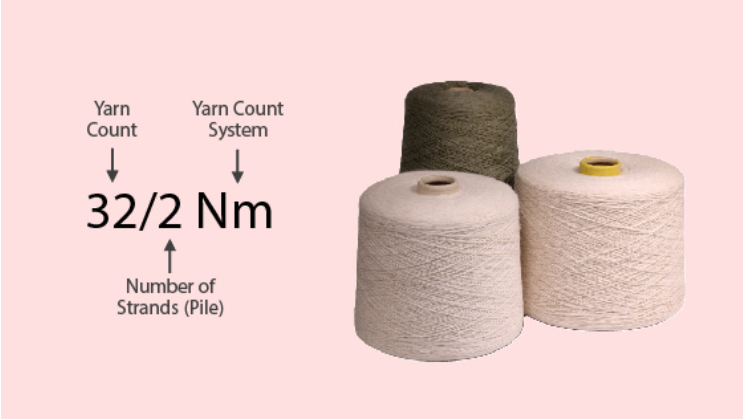
When sourcing knitted scarves or beanies, you will encounter the term "Nm" on specification sheets. For many buyers, it's just a number — but that number has a direct impact on the weight, softness, durability, and cost of your finished product.
This guide explains what yarn count means, how to read it, and how to use it to specify exactly what you want. For a complete overview of all quality factors, see our Ultimate Guide to Quality for Knitted Scarves & Beanies.
1. What Is Yarn Count?
Yarn count is a measure of yarn thickness. The finer the yarn, the higher the number. The thicker the yarn, the lower the number.
The Metric System (Nm)
Nm (Metric Count) is the most common system for wool, cashmere, and other knitted products.
Definition: The number of 1,000-meter lengths per kilogram of yarn.
| Nm Value | Yarn Thickness | Typical Use |
|---|---|---|
| Nm 10 | Very thick, chunky | Heavy winter scarves, chunky knits |
| Nm 20 | Thick | Chunky beanies, heavy scarves |
| Nm 28 | Medium-thick | Standard winter scarves |
| Nm 32 | Medium | Everyday scarves, beanies |
| Nm 48 | Medium-fine | Lightweight scarves, fine beanies |
| Nm 60 | Fine | Premium lightweight scarves |
| Nm 80+ | Very fine | Ultra-premium, next-to-skin soft |
Other Yarn Count Systems
| System | Symbol | Used For | Rule |
|---|---|---|---|
| Metric | Nm | Wool, cashmere, worsted | Higher = finer |
| English Cotton | Ne | Cotton | Higher = finer |
| Tex | Tex | Technical specifications | Lower = finer |
| Denier | D | Silk, polyester filament | Lower = finer |
2. What "Nm 2/28" Means
You will often see yarn specifications written like Nm 2/28 or Nm 60/2. Here is how to read it.
Breaking Down the Notation
| Notation | Meaning |
|---|---|
| Nm 60/2 | Two-ply yarn, each single yarn is Nm 60 |
| Nm 2/28 | Two-ply yarn, each single yarn is Nm 28 |
| Nm 1/20 | Single-ply yarn, Nm 20 |
Calculating Effective Yarn Thickness
When yarns are plied (twisted together), the effective count changes:
| Yarn Specification | Effective Count |
|---|---|
| Nm 60/2 | Approximately Nm 30 |
| Nm 48/2 | Approximately Nm 24 |
| Nm 28/2 | Approximately Nm 14 |
| Nm 20/1 | Nm 20 (single-ply) |
Rule of thumb: A 2-ply yarn has approximately half the Nm value of its singles. Nm 60/2 feels like a single-ply Nm 30.
3. How Yarn Count Affects Your Product
Weight
| Yarn Count | Fabric Weight | Product Feel |
|---|---|---|
| Finer (Nm 60+) | Lighter | Lightweight, drapes well |
| Medium (Nm 28-48) | Medium | Balanced, everyday wear |
| Thicker (Nm 20-) | Heavier | Chunky, substantial |
Softness
| Yarn Count | Softness | Why |
|---|---|---|
| Finer (Nm 60+) | Very soft | More fibers per square inch, smoother surface |
| Medium (Nm 28-48) | Soft | Balanced |
| Thicker (Nm 20-) | Can be scratchy | Fewer, thicker fibers |
Durability
| Yarn Count | Durability | Why |
|---|---|---|
| Finer (Nm 60+) | Good with proper twist | More contact points, but thinner structure |
| Medium (Nm 28-48) | Best | Balanced thickness and strength |
| Thicker (Nm 20-) | Good but bulky | Strong but heavy |
Cost
| Yarn Count | Cost | Why |
|---|---|---|
| Finer (Nm 60+) | Higher | More processing, more time on machine |
| Medium (Nm 28-48) | Standard | Most common, efficient to produce |
| Thicker (Nm 20-) | Lower | Less processing, faster to knit |
As explained in our Knitted Scarf Pilling Guide, yarn count and twist directly influence pilling performance.
4. Yarn Count by Product Type
Knitted Scarves
| Product Style | Recommended Yarn Count | Why |
|---|---|---|
| Fine luxury scarf | Nm 60/2 – Nm 80/2 | Lightweight, soft, drapes well |
| Standard winter scarf | Nm 28/2 – Nm 48/2 | Warm, substantial, good durability |
| Chunky winter scarf | Nm 10/1 – Nm 20/1 | Very thick, heavy, statement piece |
Knitted Beanies
| Product Style | Recommended Yarn Count | Why |
|---|---|---|
| Fine gauge beanie | Nm 48/2 – Nm 60/2 | Smooth, detailed, premium look |
| Standard beanie | Nm 28/2 – Nm 32/2 | Classic, balanced |
| Chunky beanie | Nm 12/1 – Nm 20/1 | Bold, textured, casual |
For a detailed comparison of knitted product types, see our guide on Knitted vs Woven Scarves.
5. Common Buyer Mistakes
Mistake 1: Ignoring Ply
A Nm 60/2 (two-ply) and a Nm 60/1 (single-ply) are very different products.
| Specification | Effective Thickness | Durability | Pilling Risk |
|---|---|---|---|
| Nm 60/2 | Approximately Nm 30 | Higher | Lower |
| Nm 60/1 | Nm 60 | Lower | Higher |
Lesson: Always specify ply count, not just Nm.
Mistake 2: Assuming Finer Is Always Better
Finer yarn (higher Nm) is not always the right choice.
| Consideration | Why Finer May Not Work |
|---|---|
| Warmth | Thicker yarn traps more air = warmer |
| Cost | Finer yarn costs more per unit weight |
| Durability | Medium yarn often wears better |
| Style | Chunky styles require thick yarn |
Mistake 3: Not Matching Yarn to Knit Structure
| Knit Structure | Compatible Yarn Count |
|---|---|
| Fine gauge (12gg+) | Nm 48/2 – Nm 80/2 |
| Standard gauge (7gg) | Nm 28/2 – Nm 48/2 |
| Coarse gauge (3-5gg) | Nm 6/1 – Nm 20/1 |
6. How to Specify Yarn in Your Tech Pack
Complete Yarn Specification Example
YARN SPECIFICATION
- Fiber: 100% Grade A Cashmere
- Yarn count: Nm 60/2
- Ply: 2-ply
- Twist: Standard (800 TPM)
- Color: Natural (undyed) or custom dye
- Origin: Inner Mongolia
- Certification: OEKO-TEX Standard 100 Class II
Questions to Ask Your Supplier
- "What is the exact yarn count (Nm and ply)?"
- Example: "Nm 48/2" not just "48"
- "What is the twist level?"
- Low twist = softer but pills more
- Standard twist = balanced
- High twist = firmer, less pilling
- "Can you provide a yarn sample before knitting?"
- Touch the yarn before committing to production
- "What is the typical count variation?"
- Professional mills maintain ±5% tolerance
For a complete list of red flags when evaluating suppliers, see our guide on 5 Red Flags When Evaluating a Knitting Factory.
7. Yarn Count Conversion Reference
Quick Conversion Table
| Nm | Approximate Ne | Approximate Tex | Description |
|---|---|---|---|
| 80 | 47 | 12.5 | Very fine |
| 60 | 35 | 16.7 | Fine |
| 48 | 28 | 20.8 | Medium-fine |
| 32 | 19 | 31.3 | Medium |
| 28 | 16 | 35.7 | Medium-thick |
| 20 | 12 | 50.0 | Thick |
| 10 | 6 | 100.0 | Very thick |
When to Use Each System
| Situation | Use |
|---|---|
| Wool/cashmere specification | Nm |
| Cotton products | Ne |
| Technical documentation | Tex |
| Filament yarns (silk, polyester) | Denier |
8. Buyer's Action Summary
| Phase | Action |
|---|---|
| Specification | Specify Nm and ply (e.g., Nm 48/2, not just "48") |
| Sample approval | Request a yarn sample before knitting |
| Bulk production | Confirm yarn count with test report |
| Quality control | Weigh finished fabric to verify yarn consistency |
9. Related Resources
- The Ultimate Guide to Quality for Knitted Scarves & Beanies — Complete quality framework for buyers
- Knitted Scarf Pilling Guide — How yarn affects pilling
- Knitted vs Woven Scarves — Understanding construction differences
- 5 Red Flags When Evaluating a Knitting Factory — How to choose reliable suppliers
- OEKO-TEX Standard 100 Guide — Certification requirements for EU and US markets
- Knitted Scarf & Beanie FAQ — Answers to common sourcing questions
10. Next Steps
Understanding yarn count gives you control over the weight, feel, and cost of your knitted products. It is one of the most important specifications in your tech pack.
This guide is part of our Knitting Basics series. For more technical insights, explore our Technical resources.
We work with brands to specify the right yarn for their products. Contact us to discuss your yarn requirements →