Biodegradable vs Compostable Textiles Guide for Knitted Scarves & Beanies

Biodegradable vs Compostable Textiles Guide for Knitted Scarves & Beanies
"Biodegradable" and "compostable" are among the most misused and misunderstood terms in sustainable textiles. Many products claim to be biodegradable — but in a landfill, with no oxygen or microorganisms, almost nothing biodegrades. Compostable claims require specific industrial conditions rarely available to consumers.
This guide explains the scientific and regulatory distinctions between biodegradable and compostable textiles, degradation timelines for common fibers, certification standards (ASTM D6400, EN 13432), and how to make credible end-of-life claims for knitted scarves and beanies. For an overview of all sustainable fiber options, see our Sustainable Materials Guide.
1. Biodegradable vs Compostable: Critical Distinctions
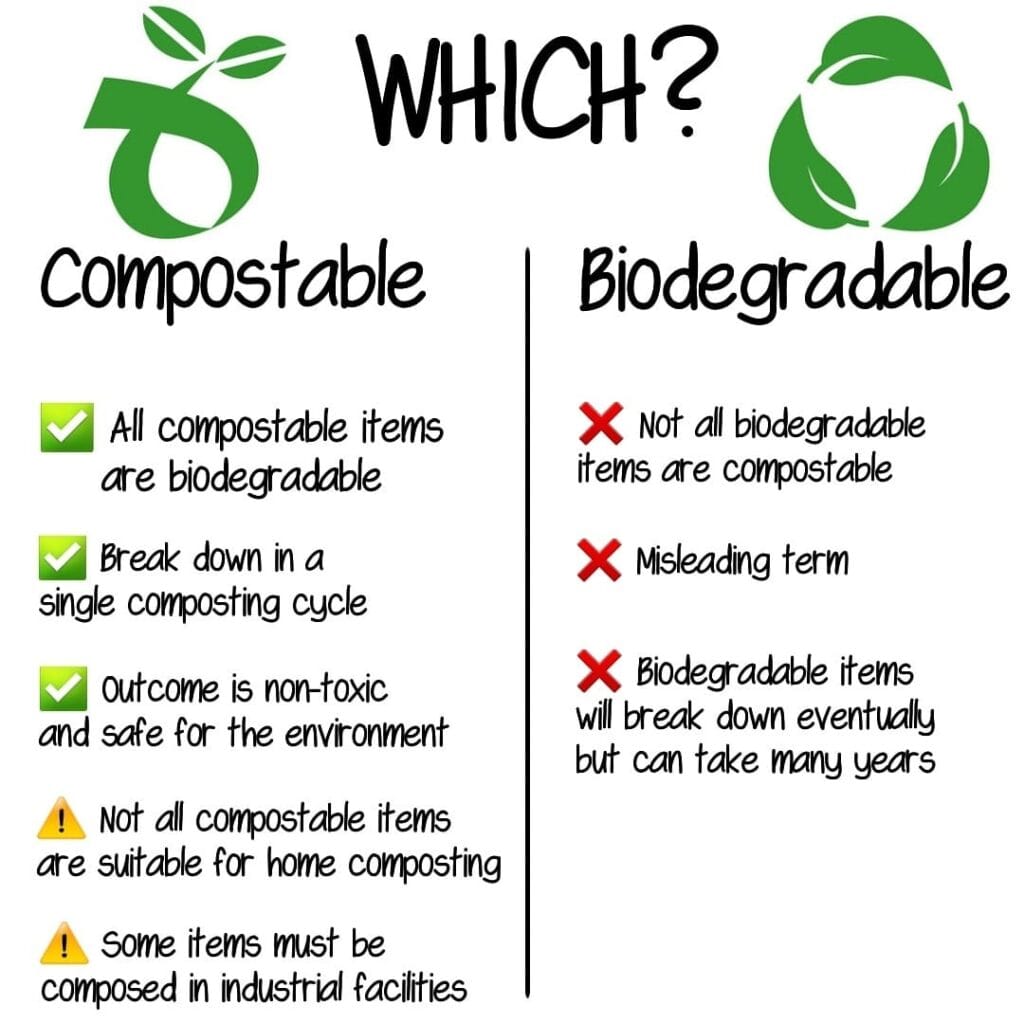
These terms are not interchangeable. One is a general claim with no time or toxicity standards; the other is a certified, regulated claim.
| Term | Definition | Timeframe | Toxicity standard | Certification required? |
|---|---|---|---|---|
| Biodegradable | Material breaks down into natural elements (water, CO₂, biomass) via microorganisms | Unspecified — could be months, years, or centuries | None — could leave toxic residue | No — self-declared claims common |
| Compostable | Material biodegrades in a composting environment within a specified timeframe, leaving no toxic residue | Industrial: 180 days (ASTM D6400 / EN 13432) Home: 6-12 months (OK compost HOME) |
Yes — heavy metals, ecotoxicity limits | Yes — third-party certification required |
The EU's Empowering Consumers Directive (2026 implementation) bans unsubstantiated environmental claims — including "biodegradable" without scientific evidence of degradation timeframe and conditions. Generic "biodegradable" claims will be illegal in the EU unless you can provide specific, verifiable data. Use compostable with certification instead.
2. Fiber Degradation Timelines: Reality vs Marketing
Not all natural fibers biodegrade quickly. Conditions matter more than the fiber itself.
| Fiber | Industrial compost (58°C, high humidity) | Home compost (ambient) | Landfill (anaerobic) | Soil (aerobic) | Marine (cold, low oxygen) |
|---|---|---|---|---|---|
| Organic cotton / linen / hemp | 30-90 days | 3-6 months | Years to decades (no oxygen) | 2-6 months | 1-12 months |
| Wool | 60-120 days | 6-12 months | Very slow — decades | 3-12 months | Months to years (salt water slows) |
| TENCEL™ Lyocell | 30-60 days | 3-6 months | Very slow — years | 2-4 months | 1-6 months |
| Viscose / Modal | 30-90 days | 4-8 months | Slow — years | 3-6 months | 1-6 months |
| Conventional cotton | 90-180 days | 6-12 months | Very slow — chemical residues | 4-9 months | 2-12 months |
| Polyester / Nylon / Acrylic | Does not biodegrade — persists for centuries as microplastics | ||||
Over 60% of textile "biodegradable" claims lack any third-party verification. In controlled tests, many "biodegradable" synthetic blends (e.g., 70% polyester / 30% cotton) leave behind 70% of their mass as microplastic residue after 180 days of industrial composting.
3. Compostable Certification Standards
If you claim a product is compostable, you must have third-party certification. Self-declared compostable claims are greenwashing.
Industrial Composting Certifications:
| Standard | Markets | Requirements | Timeframe |
|---|---|---|---|
| ASTM D6400 | North America | 90% biodegradation in 180 days; no toxic residue; no heavy metals | 180 days |
| EN 13432 | European Union | 90% biodegradation in 180 days; disintegration (90% under 2mm); ecotoxicity tests | 180 days |
| ISO 17088 | Global | Similar to ASTM D6400 and EN 13432 — harmonized standard | 180 days |
Home Composting Certifications:
Industrial composting (58°C, controlled humidity) is very different from home composting (ambient temperature, variable conditions). Home compostable certifications are stricter.
| Standard | Markets | Requirements | Timeframe |
|---|---|---|---|
| OK compost HOME | Europe (TÜV Austria) | 90% biodegradation at ambient temperatures (20-30°C); 180 days | 180 days (home) 90 days (industrial) |
| AS 5810 | Australia | Home compostable standard — similar to OK compost HOME | 180 days |
Very few textile products qualify as home compostable. Most require industrial composting facilities — which are not available to most consumers. The average consumer does not have access to industrial composting. Claiming "compostable" on a product label without educating consumers on proper disposal is misleading.
4. Why Most Textiles Are Not Truly Biodegradable
Even natural fibers face significant barriers to real-world biodegradation.
Chemical Finishes & Dyes:
The fiber itself may be biodegradable, but the finishes applied to it often are not:
- Anti-pilling finishes — Resin coatings that prevent pilling also prevent microbial attack
- Anti-shrink treatments (wool) — Chlorine-based Hercosett coating resists biodegradation
- Water-repellent finishes (PFCs) — Persist in environment; many are PFAS (forever chemicals)
- Synthetic dyes — Metal-complex dyes and some azo dyes leave toxic residues and resist degradation
- Softeners & optical brighteners — Many synthetic auxiliaries are not biodegradable
OEKO-TEX Standard 100 certifies that a product contains no harmful substances — but does NOT certify biodegradability or compostability. A product can be OEKO-TEX certified and still persist in a landfill for decades if it contains synthetic fibers or non-biodegradable finishes.
Landfill Conditions (Most Common End-of-Life):
Approximately 85% of discarded textiles in the US and EU end up in landfills (source: EPA, 2023). Landfills are anaerobic (no oxygen), dry, and cold — conditions that do not support biodegradation.
- Biodegradation requires oxygen (aerobic conditions), moisture, and microorganisms
- Landfills lack oxygen — organic matter becomes mummified, not degraded
- Studies have found 50-year-old newspapers and 30-year-old carrots in landfills, fully legible and intact
- Even 100% cotton t-shirts do not biodegrade significantly in landfills
In a landfill (the actual destination of most discarded textiles), nothing biodegrades meaningfully. "Biodegradable" claims are largely irrelevant if the product ends up in a landfill. Real solutions require:
- Design for durability (keep product in use longer — see Knitwear Care Guide)
- Design for recyclability (not just biodegradability)
- Textile-to-textile recycling infrastructure
5. Biodegradable Synthetics: PLA, PHA, and Bio-based Polyester
Several bio-based synthetic fibers claim biodegradability. Claims vary significantly.
PLA (Polylactic Acid):
- Source: Corn starch, sugarcane, cassava
- Biodegradation: Only in industrial composting (50°C+); minimal degradation in soil or marine environments
- Properties: Similar to PET but lower melting point (cannot be ironed hot)
- Certification: OK compost INDUSTRIAL (not home compostable); ASTM D6400
- Limitation: Most PLA textiles are blended with conventional polyester, destroying compostability
- Cost: $8-15/kg yarn (comparable to rPET)
PHA (Polyhydroxyalkanoates):
- Source: Bacterial fermentation of plant oils or sugars
- Biodegradation: Biodegrades in soil, marine, and home compost (faster than PLA)
- Properties: Similar to polypropylene; soft, flexible
- Certification: OK compost HOME, marine biodegradable (ASTM D6691)
- Limitation: Very expensive ($20-40/kg), limited commercial availability
PLA is the only commercially viable biodegradable synthetic option today. However, verify:
- Is the PLA blended with any conventional polyester? (If yes, not compostable)
- Are dyes and finishes compostable? (Most are not)
- Will the consumer compost it correctly? (Most will not)
6. Marine Biodegradability: A Special Case
Marine biodegradability has gained attention due to microplastic pollution. Several fibers claim marine biodegradability.
Standards:
- ASTM D6691 — Standard test method for determining aerobic biodegradation of plastic materials in marine environment
- OK biodegradable MARINE — TÜV Austria certification for marine biodegradation
Fiber Performance in Marine Conditions:
| Fiber | Marine biodegradation | Timeframe | Certification available? |
|---|---|---|---|
| Cellulosics (cotton, linen, TENCEL™) | Yes — readily biodegrades in marine environments | 1-12 months | ASTM D6691 possible (expensive) |
| Wool | Yes — but slower than cellulosics | 3-18 months | Limited |
| PLA | Very slow — limited marine degradation | Years | Not typically certified |
| PHA | Yes — rapidly biodegrades | 1-6 months | ASTM D6691, OK MARINE |
| Conventional polyester, nylon, acrylic | No — persists as microplastics | Centuries | None |
Some polyester products are marketed with "marine biodegradable" additives (e.g., d2w, EcoOne). These claims are highly controversial. Independent testing (including EU studies) has found:
- Additives cause fragmentation into microplastics, not complete biodegradation
- Residue remains as microplastic
- No third-party certification standard exists for "marine biodegradable polyester"
7. Making Credible End-of-Life Claims for Knitwear
If you want to make biodegradability or compostability claims on your scarves or beanies, follow these rules.
Acceptable Claims (With Evidence):
- ✓ "Certified compostable to EN 13432 in industrial composting facilities" (with certification)
- ✓ "Made from 100% GOTS-certified organic cotton, which is naturally biodegradable in soil" (qualify — "in soil" not "any environment")
- ✓ "This 100% TENCEL™ Lyocell scarf biodegrades in industrial composting within 90 days" (with test data)
Claims to Avoid (Greenwashing):
- ✗ "Biodegradable" (with no timeframe, conditions, or certification)
- ✗ "Eco-friendly biodegradable" (vague, unsubstantiated)
- ✗ "Will biodegrade in a landfill" (false — as discussed, landfills are anaerobic)
- ✗ "100% biodegradable" on a synthetic blend (even 5% polyester leaves microplastic residue)
- ✗ "Compostable" without third-party certification (OK compost, ASTM D6400, etc.)
For EU compliance, see our ESPR Digital Product Passport Guide — end-of-life information will be required in DPPs by 2028.
8. Material Selection for End-of-Life Performance
If biodegradability / compostability is a priority for your scarf or beanie, follow these material rules.
Do Use:
- 100% cellulosics (organic cotton, linen, hemp, TENCEL™ Lyocell) with compostable finishes
- 100% wool with non-chlorine anti-shrink (peroxide or plasma)
- Natural fiber blends only (e.g., cotton/linen, cotton/hemp)
- GOTS-certified or OEKO-TEX certified processing (restricts non-biodegradable finishing chemicals — see GOTS certification guide)
Avoid (For Compostability Claims):
- Any synthetic fibers (polyester, nylon, acrylic, elastane) — even 1% ruins compostability
- Chlorine-based anti-shrink on wool
- Metal-complex dyes, azo dyes, PFC finishes
- Synthetic threads (use cotton or other natural fiber thread instead)
- Plastic buttons, zippers, labels (use wood, metal, or natural fiber alternatives)
Under EN 13432 and ASTM D6400, a product must be 98%+ organic material to qualify for industrial compostability certification. This means:
- No synthetic fibers (including elastane for stretch)
- No synthetic threads
- No plastic components (zippers, buttons, labels)
- Compostable inks for printing (rare)
9. Buyer's Checklist for Biodegradable/Compostable Knitwear
- ☐ Decide if you need certified compostable (marketing claim) or just biodegradable (lower legal risk)
- ☐ For compostable claims: obtain EN 13432 (EU) or ASTM D6400 (US) certification
- ☐ Specify 100% natural fibers — no synthetics, including elastane and threads
- ☐ Specify compostable trims (buttons, labels) — or design without them
- ☐ Require GOTS or OEKO-TEX certification to restrict non-biodegradable finishes
- ☐ Avoid chlorine anti-shrink on wool (use peroxide or plasma)
- ☐ For PLA: verify no polyester blend and require OK compost certification
- ☐ Never claim "biodegradable" without qualifying timeframe and conditions
- ☐ For EU market: prepare for Empowering Consumers Directive (2026) banning generic "biodegradable" claims
- ☐ Include proper disposal instructions on product labels (e.g., "Compostable in industrial facilities only — check local availability")
10. Questions to Ask Your Supplier
- ✓ "Do you have third-party compostability certification for this product? Which standard (EN 13432, ASTM D6400, OK compost)?"
- ✓ "Are the dyes and finishes also compostable? Can you provide certification?"
- ✓ "Is the thread natural fiber or synthetic? For buttons/labels — are they compostable?"
- ✓ "For PLA: is this 100% PLA or blended? Do you have OK compost certification?"
- ✓ "For wool: is anti-shrink chlorine-free?"
- ✓ "Can you provide test data showing biodegradation percentage and timeframe under specific conditions (soil, marine, industrial compost)?"
- ✓ "What is the price premium for compostable-certified vs conventional natural fiber products?"