Knitwear Printing Guide for Knitted Scarves & Beanies

Knitwear Printing Guide for Knitted Scarves & Beanies
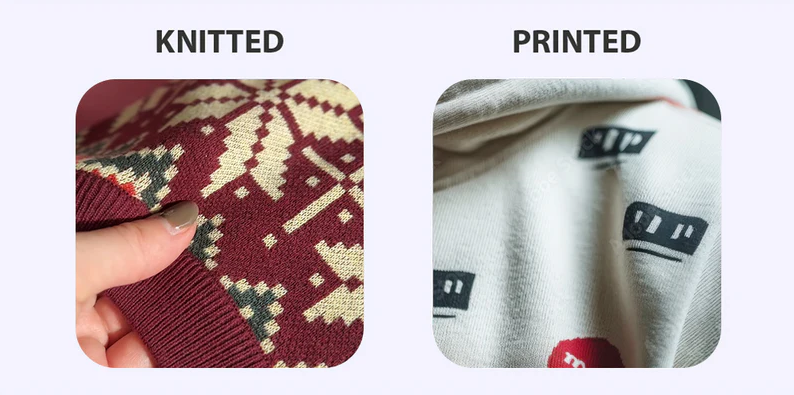
Printing adds color, pattern, and branding to knitted scarves and beanies. The printing method you choose affects color vibrancy, durability, cost, minimum order quantity, and the types of designs possible.
This guide covers the most common printing methods for knitted accessories — screen printing, digital printing, sublimation, and heat transfer. For color fastness guidance, see our Color Fastness Guide. For quality standards, see our Ultimate Guide to Quality for Knitted Scarves & Beanies.
1. Why Printing Method Matters for Buyers
- Design capability: Some methods can print photographic images, others cannot
- Color vibrancy: Different methods produce different color saturation
- Durability: Print durability varies by method and fabric
- Cost: Setup costs vs per-unit costs vary significantly
- Minimum order quantity: Screen printing requires higher MOQ than digital
- Hand feel: Some prints add texture; others are barely perceptible
For buyers: The printing method you choose determines whether your design is possible, how it looks, how long it lasts, and how much it costs.
For color standards, see our Color Fastness Guide.
2. Screen Printing
Screen printing uses a mesh screen through which ink is pushed onto the fabric. A separate screen is required for each color in the design.
Characteristics
- Color vibrancy: Excellent — opaque, vibrant colors
- Design complexity: Limited by number of screens (typically 4-8 colors)
- Durability: Excellent — ink bonds well to fabric
- Hand feel: Slight texture from ink film
- Setup cost: High (screen preparation per color)
- Per-unit cost (volume): Low
- MOQ: Higher (typically 200-500 pieces)
Best For
- Simple logos and text
- Spot colors (Pantone matching)
- High-volume production
- Cotton and polyester fabrics
- Bold, graphic designs
Buyer Considerations
- Each color requires a separate screen (cost adds up)
- Gradients and photographs are not possible
- Screen printing has a thick ink layer (feels slightly raised)
- Best for simple designs with few colors
- Pantone color matching is excellent
3. Digital Printing (Direct-to-Garment / DTG)
Digital printing uses inkjet technology to print directly onto the fabric. No screens are required — the design is printed directly from a digital file.
Characteristics
- Color vibrancy: Good to excellent (depends on fabric and pretreatment)
- Design complexity: Unlimited — photographs, gradients, fine detail
- Durability: Good to excellent (depends on ink and curing)
- Hand feel: Soft — ink absorbs into fabric
- Setup cost: Zero (no screens)
- Per-unit cost (volume): Higher than screen printing at volume
- MOQ: Low (1 piece possible)
Best For
- Photographic images and gradients
- Small batches and samples
- Complex, multi-color designs
- Custom, personalized products
- Cotton and cotton-blend fabrics
Buyer Considerations
- Pretreatment may be required for dark fabrics
- Color matching to Pantone is more difficult than screen printing
- White ink on dark fabrics requires special handling
- Per-unit cost is higher for large volumes
- Fabric must be smooth — textured knits may print unevenly
4. Sublimation Printing
Sublimation printing uses heat to transfer dye from paper to fabric. The dye converts from solid to gas and bonds with polyester fibers.
Characteristics
- Color vibrancy: Excellent — dye becomes part of the fiber
- Design complexity: Unlimited — photographs, gradients, fine detail
- Durability: Excellent — will not crack, peel, or fade
- Hand feel: No hand feel — dye is inside the fiber
- Setup cost: Low
- Per-unit cost: Medium
- MOQ: Low (1 piece possible)
Best For
- Polyester fabrics only (minimum 65% polyester)
- All-over prints
- Photographic images
- Scarves and lightweight accessories
- Sports and performance knitwear
Buyer Considerations
- Polyester only — does not work on cotton, wool, or cashmere
- Colors appear lighter on dark base fabrics
- Excellent for all-over seamless prints
- Wash fastness is excellent (Grade 4+)
- No hand feel — print is invisible to touch
5. Heat Transfer Printing
Heat transfer uses heat and pressure to transfer a pre-printed design from paper or film onto fabric. Common types include vinyl (for text/logos) and digital transfer (for full-color images).
Characteristics
- Color vibrancy: Good
- Design complexity: Good for vinyl (simple), excellent for digital transfer
- Durability: Moderate — may crack or peel after multiple washes
- Hand feel: Noticeable film feel (vinyl), softer (digital transfer)
- Setup cost: Low
- Per-unit cost: Low to medium
- MOQ: Very low (1 piece possible)
Best For
- Small batch custom orders
- Names, numbers, simple logos (vinyl)
- Promotional products
- Samples and prototypes
Buyer Considerations
- Vinyl transfers have a noticeable feel (thick plastic layer)
- Digital transfers are softer but less durable
- Not recommended for high-end products
- Good for small orders where other methods are cost-prohibitive
6. Printing Method Comparison
- Screen printing: Color complexity = Low (4-8 colors); Photo quality = No; Durability = Excellent; Hand feel = Slight texture; Setup cost = High; MOQ = High (200-500); Best for simple logos, high volume
- Digital (DTG): Color complexity = Unlimited; Photo quality = Yes; Durability = Good; Hand feel = Soft; Setup cost = Zero; MOQ = Low (1); Best for complex designs, small batches
- Sublimation: Color complexity = Unlimited; Photo quality = Yes; Durability = Excellent; Hand feel = None; Setup cost = Low; MOQ = Low (1); Best for polyester, all-over prints
- Heat transfer: Color complexity = Limited (vinyl) / Unlimited (digital); Photo quality = Yes (digital); Durability = Moderate; Hand feel = Noticeable; Setup cost = Low; MOQ = Very low (1); Best for small orders, promotional products
7. Printing Method by Fabric Type
Cotton
- Recommended: Screen printing (best durability), Digital (DTG)
- Not suitable: Sublimation (requires polyester)
Polyester
- Recommended: Sublimation (excellent), Screen printing, Digital (DTG with pretreatment)
- Note: Sublimation is the best choice for polyester
Wool / Cashmere
- Recommended: Screen printing (best), Digital (DTG with pretreatment)
- Not suitable: Sublimation (requires polyester), Heat transfer (may damage fibers)
- Note: Screen printing is safest for luxury fibers
Acrylic
- Recommended: Screen printing, Digital (DTG)
- Not suitable: Sublimation (requires polyester)
Blends
- Cotton/polyester blends: Screen printing or DTG
- Wool/polyester blends: Screen printing (sublimation requires ≥65% polyester)
For material guidance, see our Sustainable Materials Guide.
8. Cost Comparison
Setup Cost
- Screen printing: High ($20-100 per color)
- Digital (DTG): Zero
- Sublimation: Low ($0-50 per design)
- Heat transfer: Low ($10-50 per design)
Per-Unit Cost (Small Batch, 50 pcs)
- Screen printing: High (setup amortization)
- Digital (DTG): Medium
- Sublimation: Low
- Heat transfer: Low
Per-Unit Cost (Large Batch, 1,000 pcs)
- Screen printing: Low
- Digital (DTG): High
- Sublimation: Medium
- Heat transfer: Medium
Economic crossover point: Screen printing becomes more economical than digital at approximately 200-500 pieces, depending on number of colors.
For cost analysis, see our Cost Breakdown Guide.
9. Buyer's Printing Checklist
- Confirm fabric type is compatible with your chosen printing method
- For polyester, consider sublimation (best durability and hand feel)
- For small batches, choose digital or sublimation
- For large batches with few colors, choose screen printing
- Request color fastness test reports (washing, rubbing, light)
- Approve print sample before bulk production
- For screen printing, approve each color separately
10. Questions to Ask Your Supplier
- What printing methods do you offer?
- Which method do you recommend for my fabric and design?
- Can you provide a printed sample before bulk?
- What is your minimum order quantity for screen printing?
- Do you offer Pantone color matching for screen printing?
- Can you provide color fastness test reports?
For supplier evaluation, see our 5 Red Flags When Evaluating a Knitting Factory.
11. Related Resources
- Color Fastness Guide
- The Ultimate Guide to Quality for Knitted Scarves & Beanies
- Sustainable Materials Guide
- Knit Structures Guide
- Cost Breakdown Guide
- Sampling & Lead Time Guide
- How to Write a Tech Pack
This guide is part of our Knitting Basics series.