How to Write a Tech Pack for Knitted Scarves & Beanies

How to Write a Tech Pack for Knitted Scarves & Beanies
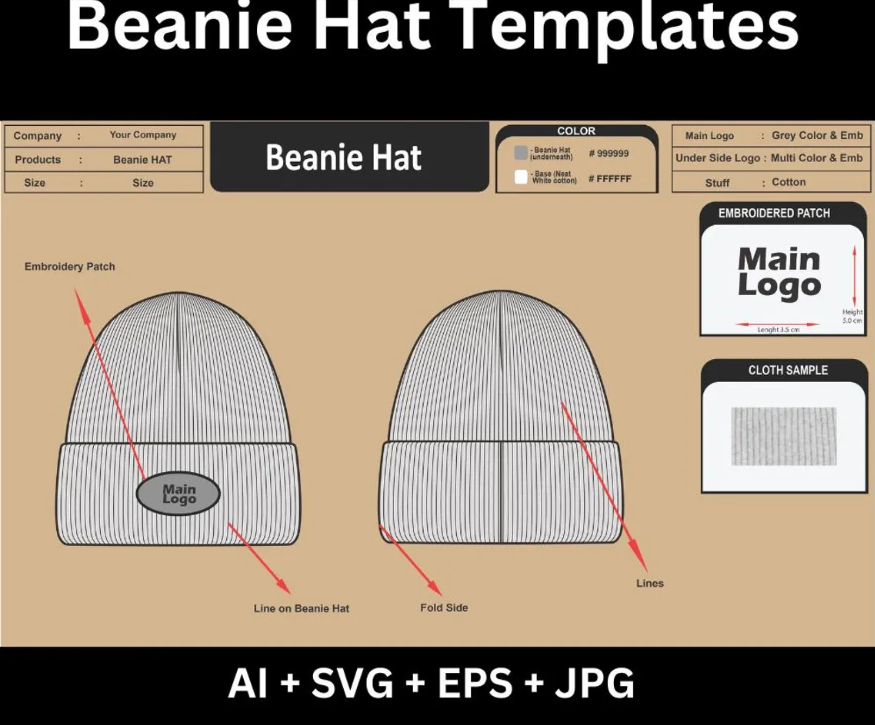
A professional tech pack (technical specification sheet) is the foundation of successful sourcing. It defines exactly what you want, prevents miscommunication, and protects you in quality disputes.
This guide covers every section of a complete tech pack for knitted scarves and beanies — from product identity to packaging. For a complete sourcing framework, see our Complete Sourcing Guide for Knitted Scarves & Beanies. For quality standards, see our Ultimate Guide to Quality for Knitted Scarves & Beanies.
1. Why a Tech Pack Is Essential
Without a tech pack:
- Factories interpret your requirements differently
- Samples may not match your expectations
- Quality disputes have no reference document
- Different batches may be inconsistent
- New suppliers cannot quote accurately
With a professional tech pack:
- Clear communication reduces sample rounds
- Consistent quality across batches
- Easier to compare quotes from different factories
- Legal protection in quality disputes
- Faster onboarding for new suppliers
For sourcing best practices, see our Complete Sourcing Guide for Knitted Scarves & Beanies.
2. Tech Pack Structure Overview
A complete tech pack for knitted scarves and beanies contains 8 sections.
- Product Identity — Style number, name, season
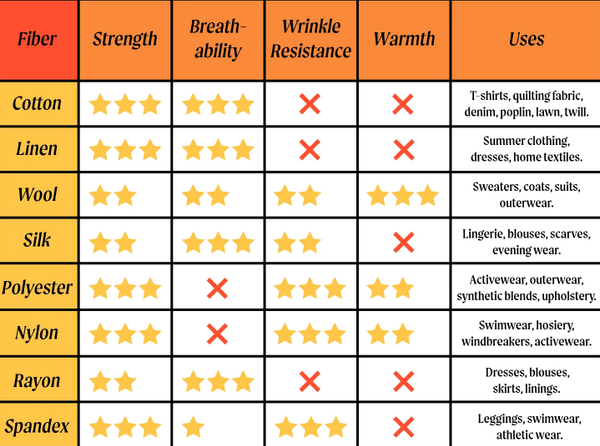
- Material Specification — Fiber, yarn, weight, construction
- Dimensional Specification — Length, width, tolerance
- Color Specification — Pantone, lab dip, tolerance
- Performance Requirements — Pilling, color fastness, shrinkage
- Label Specification — Fiber content, care, origin, brand
- Packaging Specification — Folding, polybag, carton
- Artwork & Reference — Sketches, photos, color references
For dimensional specifications, see our Dimensional Tolerance Guide. For color specifications, see our Color Fastness Guide.
3. Section 1: Product Identity
Uniquely identify your product for ordering and tracking.
Required Fields
- Style number: Your internal SKU (e.g., WS-2026-01)
- Product name: Descriptive name (e.g., "Ribbed Cashmere Scarf")
- Season: Autumn/Winter 2026, Spring/Summer 2027
- Buyer/brand name: Your company name
- Date: Tech pack creation date
- Version: Revision number (e.g., V1.0, V2.0)
Example
STYLE NUMBER: WS-2026-01
PRODUCT NAME: 2×2 Rib Cashmere Scarf
SEASON: Autumn/Winter 2026
BUYER: Weave Essence
DATE: 2026-04-19
VERSION: V1.0
4. Section 2: Material Specification
Define exactly what materials to use.
Required Fields
- Fiber content: Percentage by weight (e.g., "100% Cashmere")
- Yarn count: Nm (e.g., "Nm 60/2")
- Yarn twist: Low/standard/high (e.g., "Standard twist, 800 TPM")
- Fabric weight: GSM (e.g., "220 g/m² ±5%")
- Knit structure: (e.g., "2×2 rib")
- Gauge: (e.g., "7gg")
- Certifications: (e.g., "OEKO-TEX Standard 100 Class II")
Example
MATERIAL SPECIFICATION
- Fiber: 100% Grade A Cashmere
- Yarn count: Nm 60/2
- Twist: Standard (800 TPM)
- Weight: 220 g/m² ±5%
- Structure: 2×2 rib
- Gauge: 7gg
- Certification: OEKO-TEX Standard 100 Class II
For yarn guidance, see our Yarn Count (Nm) Explained guide. For gauge guidance, see our Knitting Gauge (GG) Guide. For knit structures, see our Knit Structures Guide.
5. Section 3: Dimensional Specification
Specify exact dimensions with tolerances.
For Scarves
- Length: e.g., "180 cm ±2 cm"
- Width: e.g., "30 cm ±1 cm"
- Fringe length: e.g., "8 cm ±1 cm" (if applicable)
For Beanies
- Height (crown to brim): e.g., "21 cm ±1 cm"
- Width (flat): e.g., "18 cm ±1 cm"
- Ribbing height: e.g., "7 cm ±0.5 cm"
Measurement Conditions
- Conditioning: 24 hours at 20°C, 65% RH
- Method: Flat, no stretching
- Points: Measure at three points (both ends and middle)
For dimensional tolerances, see our Dimensional Tolerance Guide.
6. Section 4: Color Specification
Define color requirements precisely.
Required Fields
- Pantone reference: e.g., "Pantone 15-4020 TCX"
- Color name: e.g., "Cerulean Blue"
- Color tolerance: ΔE (e.g., "ΔE <1.5")
- Light source: D65 (daylight), A (incandescent), TL84 (fluorescent)
- Lab dip approval: "Required before bulk"
Example
COLOR SPECIFICATION
- Pantone: 15-4020 TCX
- Color name: Cerulean Blue
- ΔE tolerance: <1.5 (standard), <1.0 (premium)
- Light source: D65
- Lab dip: Required, 2 rounds maximum
For color fastness, see our Color Fastness Guide.
7. Section 5: Performance Requirements
Specify test standards and minimum grades.
Required Tests
- Pilling: ISO 12945-2, Grade ≥3 (standard) or ≥4 (premium)
- Color fastness - washing: ISO 105-C06, Grade ≥3
- Color fastness - rubbing: ISO 105-X12, dry ≥4, wet ≥3
- Color fastness - light: ISO 105-B02, Grade ≥4
- Shrinkage: ISO 6330, ≤5% (wool), ≤3% (cotton/synthetic)
Example
PERFORMANCE REQUIREMENTS
- Pilling (ISO 12945-2, 2000 cycles): Grade ≥3.5
- Color fastness - washing (ISO 105-C06): Grade ≥3
- Color fastness - dry rubbing: Grade ≥4
- Color fastness - wet rubbing: Grade ≥3 (dark colors: ≥2.5)
- Color fastness - light: Grade ≥4
- Shrinkage (ISO 6330, 1 wash): ≤5%
For pilling guidance, see our Knitted Scarf Pilling Guide. For color fastness, see our Color Fastness Guide.
8. Section 6: Label Specification
Specify every label on the product.
Required Labels
- Fiber content label: Exact wording (e.g., "100% Cashmere")
- Care label: ISO symbols or written instructions
- Country of origin: "Made in China"
- Brand label: Size and placement
- Hangtag: Specifications and placement
Example
LABEL SPECIFICATION
Fiber content label:
"100% Cashmere"
"Made in China"
"RN 123456"

Care label (ISO symbols):
- Machine wash cold (30°C)
- Do not bleach
- Dry flat
- Do not iron
- Dry clean

Placement: Inside left seam (scarves), inside back (beanies)
For compliance requirements, see our Compliance Guide for Knitted Scarves & Beanies and Textile Labeling Regulations Guide.
9. Section 7: Packaging Specification
Define how the product is packed.
Required Fields
- Folding method: Diagram or description
- Polybag: Material, thickness, size, ventilation holes
- Hangtag: Attachment method and placement
- Carton: Dimensions, weight, marking
- Packing ratio: Pieces per carton
Example
PACKAGING SPECIFICATION
Folding method: Fold lengthwise twice, then roll
Polybag: LDPE, 50 microns, 30×40cm, 6 ventilation holes
Hangtag: Attach to folded scarf with plastic tag gun
Carton: 60×40×30cm, 50 pcs per carton, 15kg
Carton marking: Style number, color, quantity, destination
10. Section 8: Artwork & Reference
Provide visual references.
Required Items
- Technical flat sketch: Front and back view with dimensions
- Color reference: Pantone swatch or photo
- Hand feel reference: Physical sample (if available)
- Label placement diagram: Where each label goes
- Packaging diagram: Folding and packing method
11. Tech Pack Template (Blank)
TECH PACK
================================================================================
SECTION 1: PRODUCT IDENTITY
Style number: _______________
Product name: _______________
Season: _______________
Buyer: _______________
Date: _______________
Version: _______________

SECTION 2: MATERIAL SPECIFICATION
Fiber content: _______________
Yarn count: _______________
Yarn twist: _______________
Fabric weight (GSM): _______________
Knit structure: _______________
Gauge: _______________
Certifications: _______________

SECTION 3: DIMENSIONAL SPECIFICATION
Length: _______________ (±___ cm)
Width: _______________ (±___ cm)
Fringe length: _______________ (±___ cm)
Measurement conditions: _______________

SECTION 4: COLOR SPECIFICATION
Pantone: _______________
Color name: _______________
ΔE tolerance: _______________
Light source: _______________

SECTION 5: PERFORMANCE REQUIREMENTS
Pilling: ISO 12945-2, Grade ≥___
Color fastness - washing: Grade ≥___
Color fastness - dry rubbing: Grade ≥___
Color fastness - wet rubbing: Grade ≥___
Color fastness - light: Grade ≥___
Shrinkage: ≤___%

SECTION 6: LABEL SPECIFICATION
Fiber content label text: _______________
Care label: _______________
Country of origin: _______________
Brand label placement: _______________

SECTION 7: PACKAGING SPECIFICATION
Folding method: _______________
Polybag size: _______________
Carton dimensions: _______________
Pieces per carton: _______________

SECTION 8: ARTWORK
Technical flat sketch: [ATTACH]
Color reference: [ATTACH]
Label placement: [ATTACH]
================================================================================
12. Buyer's Tech Pack Checklist
- All 8 sections completed
- Dimensions include tolerances
- Colors have Pantone references
- Test methods and minimum grades specified
- Labels specified with exact wording
- Packaging defined
- Artwork attached
- Version controlled
- Shared with factory in editable format
For supplier evaluation, see our 5 Red Flags When Evaluating a Knitting Factory.
13. Related Resources
- The Complete Sourcing Guide for Knitted Scarves & Beanies
- The Ultimate Guide to Quality for Knitted Scarves & Beanies
- Yarn Count (Nm) Explained
- Knitting Gauge (GG) Guide
- Knit Structures Guide
- Dimensional Tolerance Guide
- Color Fastness Guide
- Knitted Scarf Pilling Guide
- Compliance Guide for Knitted Scarves & Beanies
- Textile Labeling Regulations Guide
- 5 Red Flags When Evaluating a Knitting Factory
This guide is part of our Sourcing Tips series.