Customs Documentation Guide for Knitwear Importers | Knitted Scarves & Beanies

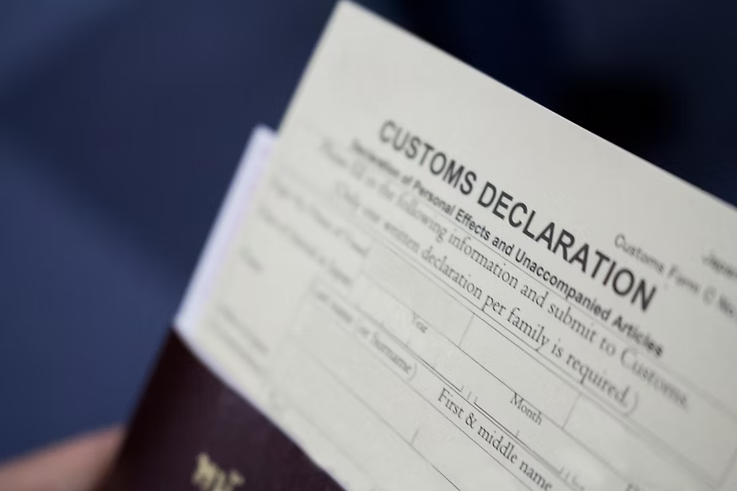
Customs Documentation Guide for Knitwear Importers
Proper customs documentation ensures smooth clearance of your knitted scarves and beanies. Missing or incorrect documents can cause delays, storage fees, fines, and even seizure of goods.
This guide covers the essential documents for importing knitwear, including commercial invoice, packing list, bill of lading, certificates of origin, and compliance certificates. For a complete compliance framework, see our Compliance Guide for Knitted Scarves & Beanies. For Incoterms guidance, see our Incoterms Guide for Knitwear Buyers.
1. Why Customs Documentation Matters
- Avoid delays: Missing documents = customs hold = storage fees
- Avoid fines: Incorrect declarations = penalties
- Avoid seizure: Prohibited substances or false declarations = goods seized
- Determine duties: HS code determines duty rate
- Claim preferences: Certificates of origin can reduce or eliminate duties
For buyers: You are legally responsible for the accuracy of customs declarations, even if a broker handles the filing.
For compliance requirements, see our Compliance Guide for Knitted Scarves & Beanies.
2. Essential Customs Documents
Commercial Invoice
The commercial invoice is the primary customs document. It must be accurate and complete.
Required information:
- Seller and buyer name and address
- Invoice date and number
- HS code (6-digit minimum, 10-digit preferred)
- Product description (fiber content, construction, dimensions)
- Quantity (pieces, dozens, cartons)
- Unit price and total value (FOB or CIF)
- Currency (USD, EUR, GBP)
- Country of origin
- Incoterm (EXW, FOB, CIF, DDP)
- Shipping terms and carrier
Example Commercial Invoice Entry
INVOICE NO: WE-2026-001
DATE: 2026-04-20

SELLER: Weave Essence Co., Ltd.
[Address, China]

BUYER: [Your company name, address]

PRODUCT: 100% Cashmere Scarf
HS CODE: 6214.20 (US) / 6117.10 (EU knit)
FIBER: 100% Grade A Cashmere
DIMENSIONS: 180×30cm
QUANTITY: 200 pcs
UNIT PRICE: $32.00 FOB Ningbo
TOTAL VALUE: $6,400.00
COUNTRY OF ORIGIN: China
INCOTERM: FOB Ningbo
The packing list details how goods are packed and identifies each carton.
Required information:
- Carton numbers (e.g., Carton 1 of 10)
- Carton dimensions (length × width × height)
- Gross weight and net weight per carton
- Quantity per carton
- Product description per carton
- Total cartons, total weight, total pieces
Example Packing List Entry
CARTON NO: 1-10
DIMENSIONS: 60×40×30cm per carton
GROSS WEIGHT: 12 kg per carton
NET WEIGHT: 10 kg per carton
QUANTITY: 20 pcs per carton
DESCRIPTION: 100% Cashmere Scarf
TOTAL CARTONS: 10
TOTAL PIECES: 200
TOTAL GROSS WEIGHT: 120 kg
4. Bill of Lading (B/L)
The bill of lading is a contract between the shipper and carrier and serves as proof of shipment.
Types of Bill of Lading:
- Sea Waybill (Express B/L): No original document required — faster, less secure
- Original Bill of Lading (OBL): Physical document required for release — more secure, slower
- Telex Release / Surrender B/L: Electronic release — common for standard shipments
- House Bill of Lading (HBL): Issued by freight forwarder
- Master Bill of Lading (MBL): Issued by shipping line
Required information: Shipper, consignee, notify party, vessel name and voyage number, port of loading, port of discharge, container number, seal number, description of goods, gross weight, measurement (CBM), number of cartons.
For shipping guidance, see our Incoterms Guide for Knitwear Buyers.
5. Certificate of Origin
The certificate of origin proves where the goods were manufactured. It is required for:
- Preferential duty rates under free trade agreements
- Customs verification of origin claims
- Compliance with country-of-origin labeling laws
Types of Certificates of Origin
- Generic CO: Statement of origin on commercial invoice (for non-preferential claims)
- Form A (GSP): For preferential duty rates from developing countries to EU
- Form E (China-ASEAN): For China-ASEAN FTA
- FTA-specific CO: For specific free trade agreements (USMCA, ChAFTA, etc.)
- EUR.1: For EU preferential trade agreements
Example CO statement on invoice: "We certify that the goods described originate in China."
For compliance guidance, see our Compliance Guide for Knitted Scarves & Beanies.
6. Compliance Certificates
Depending on your product and destination market, you may need additional certificates.
Chemical Safety Certificates
- OEKO-TEX Standard 100 certificate (EU market)
- REACH compliance declaration (EU)
- AZO dye test report
- Formaldehyde test report
- Lead and phthalates test (US children's products)
Sustainability Certificates
- GOTS certificate (organic)
- GRS certificate (recycled content)
- RWS certificate (wool/cashmere)
- FSC certificate (paper-based products)
Quality Test Reports
- Fiber composition test (ISO 1833)
- Pilling test (ISO 12945-2)
- Color fastness test (ISO 105)
- Dimensional stability / shrinkage test (ISO 6330)
For certification guidance, see our GOTS, GRS, RWS Guide and OEKO-TEX Standard 100 Guide.
7. HS Code Classification for Scarves and Beanies
Woven Scarves
- Silk: 6214.10
- Wool / cashmere: 6214.20
- Synthetic: 6214.30
- Cotton: 6214.90
Knitted Scarves and Beanies
- Knitted/crocheted accessories: 6117.10
For HS code guidance, see our Compliance Guide for Knitted Scarves & Beanies.
8. Country-Specific Requirements
United States
- FTC fiber content label (RN number)
- Country of origin label ("Made in China")
- Care label (16 CFR 423)
- Children's Product Certificate (if applicable)
European Union
- REACH compliance declaration
- OEKO-TEX certificate (recommended)
- CE marking (if applicable)
- Language-specific care labels
United Kingdom
- UK REACH declaration
- UKCA marking (if applicable)
- English care labels
For labeling guidance, see our Textile Labeling Regulations Guide.
9. Buyer's Customs Documentation Checklist
- Commercial invoice (accurate HS code, value, origin)
- Packing list (carton details, weights, dimensions)
- Bill of lading (sea waybill or original)
- Certificate of origin (if claiming preference)
- OEKO-TEX certificate (EU market)
- Test reports (fiber composition, pilling, color fastness)
- REACH declaration (EU)
- FTC labels (US)
- Children's Product Certificate (if applicable)
10. Common Documentation Mistakes
- Incorrect HS code — wrong duty rate, potential penalties
- Missing country of origin — customs hold, delay
- Value discrepancy — invoice value differs from actual — customs audit risk
- Missing certificate of origin — cannot claim preference, higher duties
- Expired certificates — OEKO-TEX, GOTS, etc. — certificate invalid
- Inconsistent information — invoice and packing list don't match — customs query
11. Questions to Ask Your Supplier
- Can you provide a commercial invoice with HS code and origin?
- Can you provide a packing list with carton details?
- Can you provide a certificate of origin?
- Do you have OEKO-TEX or other compliance certificates?
- Can you provide test reports for this order?
For supplier evaluation, see our 5 Red Flags When Evaluating a Knitting Factory.
12. Related Resources
- Compliance Guide for Knitted Scarves & Beanies
- Incoterms Guide for Knitwear Buyers
- Textile Labeling Regulations Guide
- OEKO-TEX Standard 100 Guide
- GOTS, GRS, RWS Guide
- The Ultimate Guide to Quality for Knitted Scarves & Beanies
- The Complete Sourcing Guide for Knitted Scarves & Beanies
This guide is part of our Sourcing Tips series.