Color Fastness Guide | Knitted Scarves & Beanies

Color Fastness Guide for Knitted Scarves & Beanies
Color fading, bleeding, or transferring to other garments is one of the most common consumer complaints. For B2B buyers, color fastness failures can lead to returns, chargebacks, and damaged brand reputation.
This guide explains color fastness testing, grading scales, minimum requirements by market, and how to specify color fastness in your tech pack. For a complete quality framework, see our Ultimate Guide to Quality for Knitted Scarves & Beanies. For compliance requirements, see our Compliance Guide for Knitted Scarves & Beanies.
1. What Is Color Fastness?
Color fastness is the resistance of a dyed or printed textile to color loss or color transfer under various conditions — washing, rubbing, light, perspiration, and water.
Why color fastness matters: Consumer satisfaction — no one wants a scarf that stains a white shirt or fades after a few wears. Brand reputation — color issues generate negative reviews and returns. Compliance — some markets require minimum color fastness levels. Cost — poor color fastness indicates poor dyeing quality.
How it is measured: Color fastness is rated on a grey scale from 1 (very poor) to 5 (excellent). Physical grey scale standards (ISO 105-A02) are used for consistent assessment.
For quality expectations, see our Ultimate Guide to Quality for Knitted Scarves & Beanies.
2. Color Fastness Test Methods
Washing (color change) — ISO 105-C06: Simulates machine washing. Minimum acceptable: Grade 3. Premium target: Grade 4-4.5.
Washing (staining) — ISO 105-C06: Simulates color transfer to other garments. Minimum acceptable: Grade 3. Premium target: Grade 4.
Dry rubbing — ISO 105-X12: Simulates color transfer when dry. Minimum acceptable: Grade 3.5. Premium target: Grade 4.
Wet rubbing — ISO 105-X12: Simulates color transfer when wet (rain, sweat). Minimum acceptable: Grade 2.5-3 (dark colors: 2.5). Premium target: Grade 3.5.
Light (xenon arc) — ISO 105-B02: Simulates sunlight fading. Minimum acceptable: Grade 4. Premium target: Grade 5-6.
Perspiration (acid/alkaline) — ISO 105-E04: Simulates sweat. Minimum acceptable: Grade 3. Premium target: Grade 3.5-4.
Water — ISO 105-E01: Simulates rain, accidental wetting. Minimum acceptable: Grade 3. Premium target: Grade 4.
Dry cleaning — ISO 105-D01: Simulates professional dry cleaning. Minimum acceptable: Grade 4. Premium target: Grade 4-5.
For compliance requirements, see our Compliance Guide for Knitted Scarves & Beanies.
3. Color Fastness Grading Scale
Grade 5 — No change: Excellent — no visible color loss or transfer.
Grade 4 — Slight change: Premium — very slight change, barely perceptible.
Grade 3 — Moderate change: Acceptable — visible change but acceptable for standard products.
Grade 2 — Significant change: Unacceptable — obvious color loss or transfer.
Grade 1 — Severe change: Failure — extreme color loss or transfer.
Buyer note: Grade 3 is the industry minimum for acceptable quality. Grade 4 or higher is recommended for premium positioning.
For quality standards, see our Ultimate Guide to Quality for Knitted Scarves & Beanies.
4. Minimum Requirements by Market
EU (REACH): Washing Grade 3, dry rubbing Grade 3.5, wet rubbing Grade 3, light Grade 4 — OEKO-TEX Class II equivalent.
US (FTC): Washing Grade 3, dry rubbing Grade 3.5, wet rubbing Grade 2.5, light Grade 4 — less strict on wet rubbing.
UK: Washing Grade 3, dry rubbing Grade 3.5, wet rubbing Grade 3, light Grade 4 — similar to EU.
Japan (JIS): Washing Grade 3-4, dry rubbing Grade 4, wet rubbing Grade 3, light Grade 4 — stricter standards.
Premium brands: Washing Grade 4, dry rubbing Grade 4, wet rubbing Grade 3.5, light Grade 5 — above regulatory minimum.
For EU compliance details, see our Compliance Guide for Knitted Scarves & Beanies.
5. Factors That Affect Color Fastness
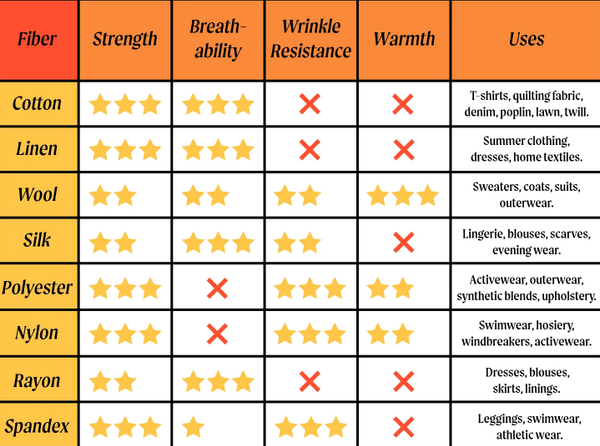
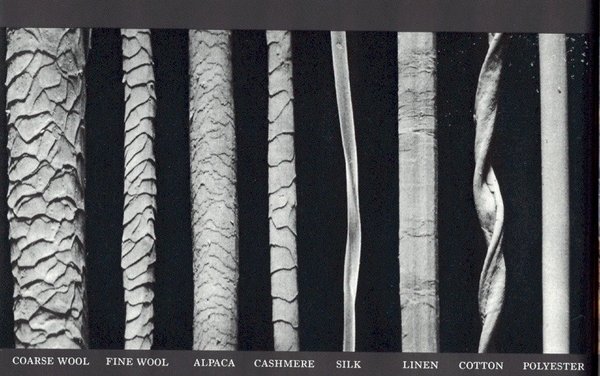
Fiber type: Wool/cashmere — good overall, but UV fastness varies. Cotton/linen/viscose — reactive dyes give good fastness, vat dyes give excellent. Polyester — excellent in all categories with disperse dyes. Acrylic — excellent light fastness, good washing. Nylon — good, but light fastness can be poor with some dyes.
Dye class: Acid dyes (wool, cashmere, silk) — good overall, requires proper fixation. Reactive dyes (cotton, viscose) — excellent. Disperse dyes (polyester) — excellent. Basic dyes (acrylic) — excellent.
Dyeing process quality: Insufficient dye fixation → poor washing fastness. Inadequate rinsing → poor staining fastness. Incorrect pH → poor rubbing fastness. Poor quality dyes → poor light fastness.
Color shade: Dark colors (navy, black, deep burgundy) have lower wet rubbing fastness naturally. Light colors are more prone to yellowing from light exposure. Neon and bright colors may have lower light fastness.
For dyeing guidance, see our Yarn Count (Nm) Explained guide.
6. How to Specify Color Fastness in Your Tech Pack
COLOR FASTNESS SPECIFICATION
- Test standard: ISO 105 (or AATCC for US market)
- Washing fastness (color change): Grade ≥3.5
- Washing fastness (staining): Grade ≥3
- Dry rubbing fastness: Grade ≥4
- Wet rubbing fastness: Grade ≥3 (dark colors: Grade ≥2.5)
- Light fastness: Grade ≥4 (20 hours)
- Test report required from ISO 17025 accredited lab
Questions to ask your factory: What dye class do you use for my fiber type? Can you provide color fastness test reports? What is your typical wet rubbing fastness for dark colors? Do you perform fixation testing during production? Can you test after finishing (not just after dyeing)?
For supplier evaluation, see our 5 Red Flags When Evaluating a Knitting Factory.
7. Common Color Fastness Problems and Causes
Color bleeding: Color transfers to adjacent fabric during washing. Root cause: insufficient dye fixation, inadequate rinsing. Prevention: request fixation test, increase rinsing cycles.
Color fading: Color becomes lighter after washing or light exposure. Root cause: poor dye quality, insufficient UV absorbers. Prevention: use high-quality dyes, add UV absorbers for light colors.
Poor wet rubbing: Color transfers when wet (rain, sweat). Root cause: surface dye not fully fixed, softener interference. Prevention: proper fixation, compatible softener selection.
Inconsistent between batches: Different colors in same order. Root cause: dye recipe variation, different dye lots. Prevention: head-to-head confirmation, spectrophotometer measurement.
Metamerism: Colors match under one light but not another. Root cause: different dye formulations for same color. Prevention: spectrophotometer measurement under multiple illuminants (D65, A, TL84).
For defect identification, see our Fabric Defect Identification Guide.
8. Color Fastness Testing Protocol for Buyers
Before sampling: Specify minimum color fastness grades in your tech pack. Require test reports from ISO 17025 accredited lab. Agree on test standards (ISO vs AATCC).
During sampling: Request lab dip approval before bulk dyeing. Test color fastness on production-representative sample. For dark colors, specifically request wet rubbing test.
Before bulk production: Confirm head-to-head color approval. Request fixation test on first dye lot. Verify softener compatibility with color fastness.
Upon shipment: Request color fastness test report from production batch. Keep report for compliance documentation. For large orders, consider independent third-party testing.
For sampling guidance, see our Sampling & Lead Time Guide.
9. Buyer's Color Fastness Checklist
- Specify minimum grades for all relevant tests
- Require ISO 17025 accredited test reports
- Request lab dip and head-to-head color approval
- Test dark colors for wet rubbing specifically
- Verify softener compatibility
- Keep test reports for compliance records
10. Related Resources
- The Ultimate Guide to Quality for Knitted Scarves & Beanies
- Compliance Guide for Knitted Scarves & Beanies
- Dimensional Tolerance Guide
- Sampling & Lead Time Guide
- Fabric Defect Identification Guide
- 5 Red Flags When Evaluating a Knitting Factory
- How to Write a Tech Pack
This guide is part of our Quality Guide series.