Pop of Color Scarf Sourcing: Bright Cashmere & Wool Colors for Buyers

Pop of color: how to source bright, high‑visibility cashmere and wool scarves
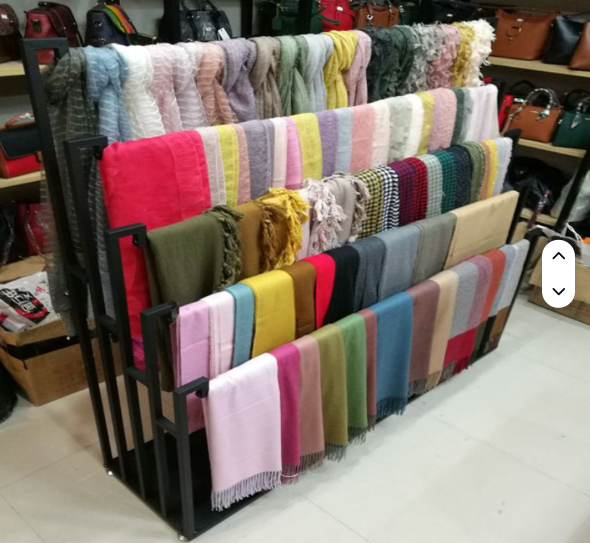
Neutral scarves are safe. But safe doesn't stop a customer on a crowded shelf. Buyers increasingly need pop of color — statement shades that jump out immediately. Electric blue. Neon pink. Citrus yellow. High‑visibility colors that sell themselves.
This guide covers the technical and sourcing side of bright cashmere and wool scarves: how to assess a factory's dye capability, which colors are riskiest, and how to avoid off‑batch failures. For foundational knowledge on dye methods, see our yarn dyeing methods guide.
1. Which colors qualify as “pop of color”?
Not every bright color works equally well on cashmere or wool. Some saturated shades risk poor light fastness or uneven dye pick‑up. Below is the buyer's reference table for pop‑color viability.
| Color family | Examples | Difficulty on cashmere/wool | Light fastness risk |
|---|---|---|---|
| Red / pink | Fuchsia, coral, cherry red | Low to moderate | Fuchsia degrades faster than cherry |
| Orange / yellow | Citrus, marigold, amber | Moderate | Yellow shows fading first |
| Green | Emerald, lime, mint | Low (emerald excellent) | Lime can shift |
| ★★★★★ | Royal blue, cobalt, electric | Low — acid dyes very stable | Excellent light fastness |
| ★★★★★ | Violet, magenta, amethyst | Moderate (purple base can split) | Depends on dye mix |
2. Factory dye capability: what to ask before sampling
Most factories can dye basic colors. Few can execute high‑saturation pop colors consistently. Ask these three questions before sending a tech pack:
- “Do you have an in‑house spectrophotometer (color measurement device)?” — Factories with spectrophotometers can match pop colors to ΔE ≤0.8. Those without rely on visual judgment and produce higher batch variation.
- “What’s your experience with acid dye combinations for bright shades?” — Pop colors often require blending 2–3 dye components (e.g., turquoise + blue + green for electric teal). Factories with limited dye‑mixing experience will struggle.
- “Can you share your latest pop‑color production references?” — Request photos of actual bulk production, not just lab dips. This reveals their real capability.
Cross‑check their answers against our color fastness guide for testing standards.
3. The neon risk: why bright cashmere fades faster
Neon and ultra‑bright shades use dye combinations with inherently lower light fastness ratings (ISO 105‑B02 Grade 3–4 vs Grade 5 for standard colors). On cashmere and wool, the problem is worse because protein fibers hold these dyes less aggressively than cotton or synthetics.
- Neon pink / orange: noticeable fading after 40–60 hours of UV exposure (equivalent to 2–3 weeks on a shop display).
- Electric blue: more stable, but still fades faster than navy or charcoal.
- Mitigation: specify UV absorbers in the finishing bath. This adds $0.30–0.60 per scarf but doubles light fastness life.
4. Lead time impact for bright colors
Pop colors extend lead times. Standard colors take 3–5 days for lab dip approval. Pop colors (especially neons and pastels) require 7–10 days for first round — and often a second round.
- Standard colors: lab dip 3–5 days → bulk dyeing 12–15 days → finishing 5–7 days → total ~25–30 days
- Pop colors / neons / pastels: lab dip 7–10 days → bulk dyeing 15–20 days → finishing + UV absorber 7–10 days → total ~35–45 days
If you need pop colors for a holiday collection, start sampling 6–8 months ahead. Emergency pop‑color orders almost always fail.
5. Cost premiums for statement colors
Bright and neon dyes cost more than standard dyes. The premium comes from three factors:
- Higher dye cost: specialty acid dyes for brights are 30–50% more expensive per kg than standard dyes.
- Longer processing: more rinse cycles to remove unfixed dye (neons require 4–6 extra rinses).
- Higher rejection rate: bright colors show subtle unevenness more easily than dark or neutral shades, increasing QC rejection by 3–5%.
Expect a 10–25% premium for high‑quality pop‑color cashmere scarves compared to the same construction in navy or charcoal. Budget accordingly.
6. How to specify pop colors in a tech pack
A vague “bright pink” written on a tech pack will be interpreted differently by every factory. Use this specification block instead:
- Pantone / Lab dip reference: provide a specific Pantone TPX or TCX number (e.g., “Pantone 17‑2036 TCX ‑ Hot Pink”).
- ΔE tolerance: specify ΔE ≤1.0 for pop colors (standard ΔE ≤1.2 for neutrals).
- Light fastness requirement: ISO 105‑B02 Grade 4 minimum. If neon, add “UV absorber required. Light fastness Grade 3.5 minimum after 80 hours.”
- Wash fastness: ISO 105‑C06 Grade 4 (same as standard).
- Rubbing fastness (wet/dry): ISO 105‑X12 Grade 4/3.5 for bright shades.
7. Factory regions with strong pop‑color capability
Not all sourcing regions handle bright colors equally well.
- China (Zhejiang, Jiangsu, Ningxia): best overall pop‑color capability. Large dyehouses have spectrophotometers, automated dispensing, and experience with neon acid dyes.
- Italy: excellent for high‑end bright cashmere, but pricing is 2–3x Asia. Suitable for luxury pop‑color collections.
- India: good for cotton pop colors, but cashmere/wool pop‑color capability is mixed. Some Ludhiana mills excel; others struggle with neon consistency.
- Mongolia: strong for natural undyed cashmere; pop‑color dyeing infrastructure is limited. Better for earth tones than neons.
For neon and bright pastel cashmere, China's Yangtze River Delta remains the most reliable region. For background on Asian manufacturing, see our factory audit checklist.
8. Buyer's checklist for pop‑color scarves
- ☐ Confirm factory has a spectrophotometer and in‑house dye lab
- ☐ Request pop‑color production references, not only lab dips
- ☐ Specify Pantone TPX/TCX reference, ΔE tolerance, and light fastness grade
- ☐ For neon: add UV absorber requirement and accept lower light fastness (Grade 3.5–4)
- ☐ Build extra lead time into your calendar (45+ days for neons)
- ☐ Budget 10–25% premium over standard colors
- ☐ Approve lab dip under both store lighting and daylight to detect metamerism
- ☐ Order 10–15% extra units for QC buffer (bright colors reject at higher rates)
Looking for pop‑color cashmere suppliers with proven neon capability? → Contact Weave Essence sourcing desk