Factory Audit Checklist for Knitwear Buyers | Knitted Scarves & Beanies

Factory Audit Checklist for Knitwear Buyers
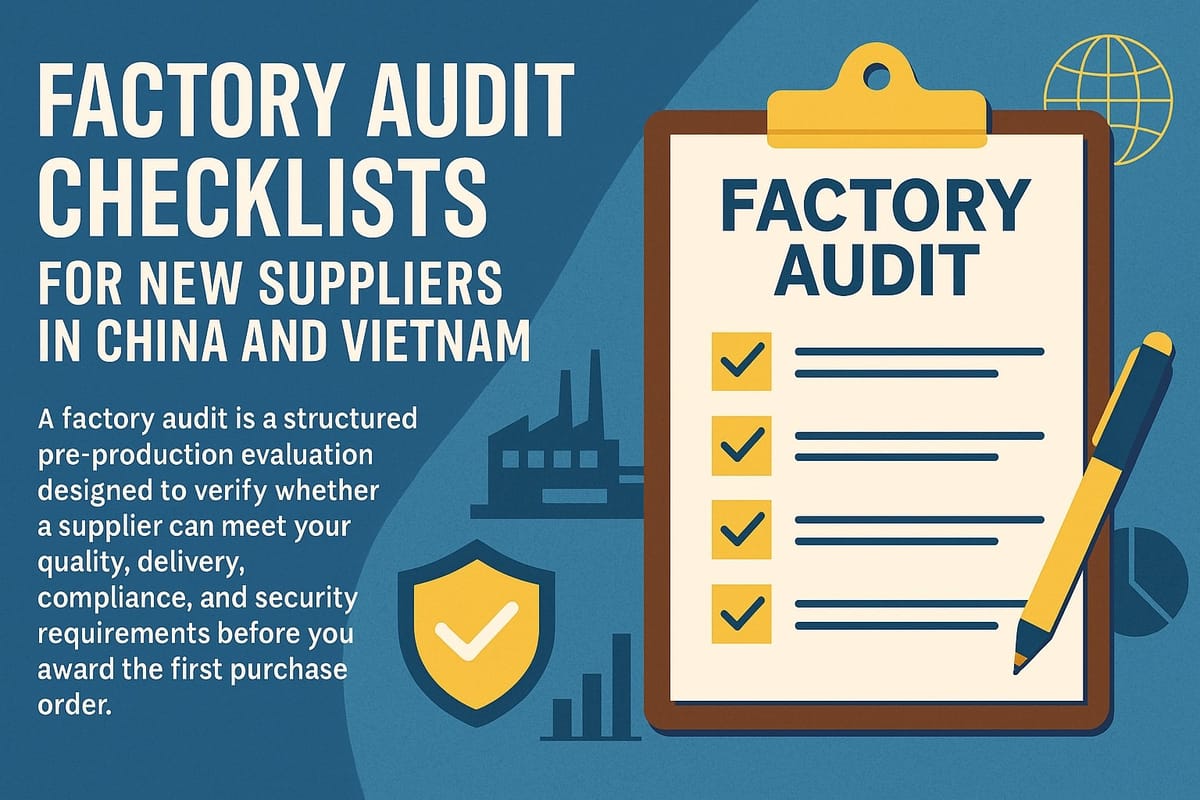
A factory audit is the most effective way to verify a supplier's capability before placing an order. This checklist covers five key areas: technical capability, quality system, compliance, commercial reliability, and communication.
Use this checklist when evaluating potential suppliers for knitted scarves and beanies. For a complete sourcing framework, see our Complete Sourcing Guide for Knitted Scarves & Beanies. For red flags, see our 5 Red Flags When Evaluating a Knitting Factory.
1. Technical Capability Assessment
Machinery and Equipment
- What knitting machine gauges does the factory have? (3gg, 5gg, 7gg, 10gg, 12gg, 14gg+)
- Are machines in good condition? (Check for visible wear, rust, oil leaks)
- What brands of machines? (Stoll, Shima Seiki, Protti, etc.)
- Does the factory have in-house finishing equipment?
- Does the factory have in-house dyeing capability or subcontracted?
- Are there quality control stations at each production stage?
Production Capacity
- What is the monthly production capacity for knitted scarves?
- What is the monthly production capacity for knitted beanies?
- What is the current utilization rate?
- Can the factory handle your expected order volume?
- Is there capacity for rush orders?
Material Expertise
- What fibers does the factory regularly process? (Cashmere, wool, cotton, acrylic, polyester, blends)
- Can the factory source certified materials? (GOTS, GRS, RWS, OEKO-TEX)
- Does the factory have relationships with reputable yarn suppliers?
- Can the factory provide yarn test reports? (Fiber composition, micron, evenness)
For technical guidance, see our Knitting Basics: A Technical Guide for Buyers.
2. Quality System Assessment
Incoming Material Control
- Does the factory inspect incoming yarn? (Check records)
- What parameters are checked? (Count, color, composition, evenness)
- Does the factory have a Uster evenness tester?
- Does the factory reject non-conforming materials?
In-Process Control
- Does the factory perform first-piece approval at start of each production run?
- How often are in-process checks performed? (Every 50 pieces, 100 pieces?)
- Are dimensions checked during production?
- Are knitting parameters documented? (Tension, speed, settings)
Final Inspection
- Does the factory have a final inspection process?
- What AQL level is used? (Typically 2.5 for major defects, 4.0 for minor)
- Are inspection records kept and available?
- What is the typical defect rate?
Testing Capability
- Does the factory have in-house testing equipment?
- What tests can be performed in-house? (Dimensions, weight, color, pilling)
- Does the factory use accredited third-party labs for compliance testing?
- Can the factory provide test reports for previous orders?
For quality standards, see our Ultimate Guide to Quality for Knitted Scarves & Beanies.
3. Compliance Assessment
Certifications
- Does the factory have OEKO-TEX Standard 100 certification? (Check Class II for adult products)
- Does the factory have GOTS certification? (For organic products)
- Does the factory have GRS certification? (For recycled products)
- Does the factory have RWS certification? (For wool/cashmere)
- Are certificates current and valid? (Check expiry dates)
Social Compliance
- Does the factory have BSCI or SMETA audit?
- What is the audit rating? (A, B, C, D, E)
- Are there any major non-conformities in the latest audit?
- Does the factory have a corrective action plan for issues found?
Chemical Management
- Does the factory have a restricted substance list (RSL)?
- Does the factory test incoming chemicals against its RSL?
- Does the factory use OEKO-TEX certified dyes and auxiliaries?
- Is wastewater treated before discharge? (Check license)
For compliance guidance, see our Compliance Guide for Knitted Scarves & Beanies.
4. Commercial Reliability Assessment
Financial Stability
- How long has the factory been in business?
- What is the factory's annual revenue?
- Does the factory have multiple buyers? (Concentration risk)
- Can the factory provide trade references?
On-Time Delivery
- What is the factory's on-time delivery rate for the past 12 months?
- Ask for specific examples: "What was your delivery performance for your last 10 orders?"
- How does the factory communicate delays?
- Is there a penalty clause for late delivery in the contract?
Pricing Transparency
- Does the factory provide a detailed cost breakdown?
- Are there hidden costs? (Sampling, testing, certification, packaging)
- How does pricing change with order volume? (MOQ tiers)
- Are there surcharges for rush orders?
Past Performance
- Request references from other buyers (preferably in your market)
- Contact references and ask about: quality, delivery, communication, problem resolution
- Search for the factory name online (reviews, complaints, news)
For supplier evaluation, see our 5 Red Flags When Evaluating a Knitting Factory.
5. Communication Assessment
Language and Responsiveness
- Does the factory have English-speaking staff for communication?
- How quickly do they respond to emails? (Within 24 hours is good)
- Are answers clear and complete?
- Do they ask clarifying questions or just say "OK"?
Technical Knowledge
- Can the factory explain their production process in detail?
- Do they understand technical terms? (Nm, gauge, ply, twist, finishing)
- Can they suggest alternatives or improvements to your design?
- Do they proactively identify potential issues?
Transparency
- Is the factory willing to share test reports, certificates, and references?
- Is the factory willing to show you around (in person or via video)?
- Do they provide written confirmations for all commitments?
- Are timelines realistic?
For tech pack guidance, see our How to Write a Tech Pack.
6. Factory Audit Scorecard
Scoring Guide
- 3 points: Exceeds requirements — excellent capability
- 2 points: Meets requirements — acceptable
- 1 point: Partially meets requirements — needs improvement
- 0 points: Does not meet requirements — red flag
Minimum Acceptable Scores
- Technical capability: Minimum 70% (21/30 points)
- Quality system: Minimum 75% (22.5/30 points)
- Compliance: Minimum 60% (18/30 points) — critical for EU market
- Commercial reliability: Minimum 70% (21/30 points)
- Communication: Minimum 80% (24/30 points)
Red Flag Threshold
If any section scores below 50% or total score below 65%, consider alternative suppliers.
7. Virtual vs In-Person Audit
In-Person Audit (Most Thorough)
- See machinery condition directly
- Touch fabric and finished products
- Build personal relationship
- Time and travel cost required
Virtual Audit (Video Call)
- Walk through factory on video call (WeChat, Zoom, Teams)
- Request live demonstration of processes
- Ask to see quality records in real time
- Lower cost, can be done remotely
Recommendation: Start with virtual audit. If satisfied, consider in-person audit before large orders.
8. Audit Preparation Checklist
- Prepare audit questions in advance
- Request documents before the audit (certificates, test reports, references)
- Schedule virtual or in-person visit
- Bring a translator if needed
- Take photos and videos for reference
- Document all findings immediately
- Request corrective action plan for issues found
9. Questions to Ask During Factory Audit
- Can I see your quality records from the last 3 months?
- What is your average defect rate?
- How do you handle non-conforming products?
- What is your on-time delivery rate?
- Can I speak with your quality manager?
- Can you show me your OEKO-TEX certificate?
- What is your typical MOQ for custom products?
- How do you communicate with international buyers?
10. Related Resources
- The Complete Sourcing Guide for Knitted Scarves & Beanies
- 5 Red Flags When Evaluating a Knitting Factory
- The Ultimate Guide to Quality for Knitted Scarves & Beanies
- Compliance Guide for Knitted Scarves & Beanies
- Sampling & Lead Time Guide
- How to Write a Tech Pack
- MOQ Guide for Knitted Scarves & Beanies
This guide is part of our Sourcing Tips series.