UKCA vs CE Marking Guide for Knitwear Buyers | Knitted Scarves & Beanies

UKCA vs CE Marking Guide for Knitwear Buyers
Since Brexit, the UK and EU have separate product marking requirements. Understanding UKCA and CE marking is essential for buyers placing scarves and beanies on the UK and EU markets.
This guide explains the requirements, differences, transition periods, and compliance steps for knitwear products. For a complete compliance framework, see our Compliance Guide for Knitted Scarves & Beanies. For chemical compliance, see our REACH & CPSIA Guide.
1. What Are UKCA and CE Marking?
UKCA (UK Conformity Assessed) and CE (Conformité Européenne) are mandatory conformity markings for products sold in Great Britain (England, Scotland, Wales) and the European Union, respectively. They indicate that a product meets applicable safety, health, and environmental requirements.
For scarves and beanies: Most knitted accessories are NOT subject to UKCA or CE marking because they are not considered "regulated products" under most directives. However, there are important exceptions.
Key exception: Children's scarves and beanies (under 14 years) may require CE/UKCA marking if they are classified as "toys" or have certain safety features. Adult scarves typically do not require marking.
For children's product compliance, see our REACH & CPSIA Guide.
2. Do Scarves and Beanies Need UKCA or CE Marking?
Adult Scarves and Beanies (General Use)
- CE marking required? No — not subject to CE marking
- UKCA marking required? No — not subject to UKCA marking
- What applies? General Product Safety Directive (GPSD) / General Product Safety Regulation (GPSR)
- Action: No marking required, but must be safe
Children's Scarves and Beanies (Under 14 Years)
- CE marking required? Yes, if classified as "toys" (cords, drawstrings, decorative elements)
- UKCA marking required? Yes, if classified as "toys" (cords, drawstrings, decorative elements)
- What applies? Toy Safety Directive (2009/48/EC) or GPSD
- Action: Assess whether product falls under Toy Safety Directive
PPE (Protective) Scarves and Beanies
- CE marking required? Yes — if marketed as protective (e.g., cold weather protection for workers)
- UKCA marking required? Yes — if marketed as protective
- What applies? PPE Regulation (EU) 2016/425
- Action: Full conformity assessment required
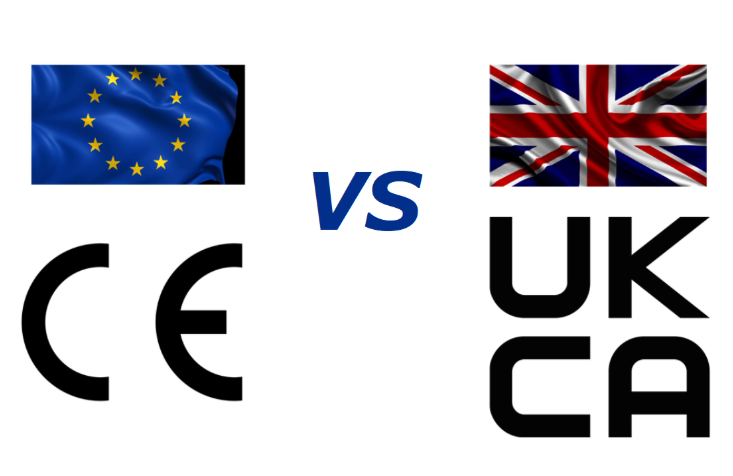
3. Key Differences: CE vs UKCA
- CE marking: Applicable to EU member states (27 countries). Accepted in EU, EEA, and Northern Ireland. Based on EU directives and regulations. Not accepted in Great Britain (from 2025).
- UKCA marking: Applicable to Great Britain (England, Scotland, Wales). Based on UK legislation (retained EU law with modifications). Not accepted in EU. Required for Great Britain from 2025 (with some exceptions).
4. Transition Periods (2026 Update)
As of April 2026, the following transition arrangements apply:
- CE marking acceptance in Great Britain: CE marking is still accepted for many products, but recognition is being phased out. Check current status before placing products.
- UKCA marking deadline for Great Britain: UKCA marking is the long-term requirement for Great Britain market access. Some products still accept CE marking during transition.
- Northern Ireland: CE marking (or UKNI marking) required under Windsor Framework. CE marking remains valid for Northern Ireland indefinitely.
Recommendation: For new product development, prepare UKCA marking for Great Britain and CE marking for EU/Northern Ireland. Dual marking (both CE and UKCA) is permitted.
5. When CE/UKCA Marking Is Required for Knitwear
Children's Products Under Toy Safety Directive
A scarf or beanie may be classified as a "toy" if it has:
- Decorative elements that could be considered play value (pompoms, tassels, animal shapes)
- Drawstrings or cords that could pose strangulation risk
- Small parts (buttons, appliqués) that could detach
- Product is marketed for children's play
If classified as a toy: Full CE/UKCA marking required, including technical file, test reports, and Declaration of Conformity.
PPE (Personal Protective Equipment)
A scarf or beanie may be classified as PPE if marketed as:
- Cold weather protection for workers
- High-visibility accessory for safety
- Protection against specific hazards
If classified as PPE: Full CE/UKCA marking required, including Notified Body assessment for Category II or III PPE.
6. How to Comply (If Marking Is Required)
Step 1: Determine Applicable Directives
- Identify which directives apply (Toy Safety, PPE, GPSD)
- Check if product is excluded or exempt
Step 2: Apply Harmonized Standards
- EN 71 series for toys (safety, flammability, small parts)
- EN ISO 13688 for PPE (general requirements)
- EN ISO 20471 for high-visibility (if applicable)
Step 3: Test and Document
- Testing by accredited laboratory
- Technical file (product description, design drawings, test reports, risk assessment)
- Declaration of Conformity (DoC)
Step 4: Affix Marking
- CE marking for EU/Northern Ireland
- UKCA marking for Great Britain
- Dual marking (both) permitted and recommended
For compliance guidance, see our Compliance Guide for Knitted Scarves & Beanies.
7. Documentation Requirements
Technical File (Must be kept for 10 years)
- Product description and identification
- Design and manufacturing drawings
- Material specifications and certificates
- Test reports from accredited labs
- Risk assessment
- Declaration of Conformity
Declaration of Conformity (DoC)
DECLARATION OF CONFORMITY
Product: Knitted Beanie with Pompom
Product code: KB-2026-01
Manufacturer: [Factory name and address]
Importer: [Your company name and address]

We declare that this product complies with:
- Toy Safety Directive 2009/48/EC
- EN 71-1: Mechanical and physical properties
- EN 71-2: Flammability
- EN 71-3: Migration of certain elements

Place and date: [Location, date]
Signature: [Name, title]
8. Buyer's Compliance Checklist
- Determine if your product requires CE/UKCA marking (adult scarves typically do not)
- For children's products, assess whether product falls under Toy Safety Directive
- For PPE, confirm classification with a compliance specialist
- Request Declaration of Conformity from supplier if marking is required
- Keep technical file for 10 years
- For Great Britain, ensure UKCA marking (or transition arrangements)
- For EU, ensure CE marking
- For Northern Ireland, CE marking (or UKNI) is required
9. Common Mistakes
- Assuming adult scarves need CE/UKCA marking — they typically do not
- Ignoring children's product classification — pompoms and tassels may trigger Toy Safety Directive
- Using CE marking for Great Britain after transition — UKCA required
- No technical file — required for all regulated products
- No Declaration of Conformity — required for all regulated products
- Testing from non-accredited labs — must be ISO 17025 accredited
10. Questions to Ask Your Supplier
- Has this product been assessed for CE/UKCA marking requirements?
- Does it fall under any specific directives (Toy Safety, PPE)?
- Can you provide test reports from accredited labs?
- Can you provide a Declaration of Conformity?
- Do you have a technical file for this product?
For supplier evaluation, see our 5 Red Flags When Evaluating a Knitting Factory.
11. Related Resources
- Compliance Guide for Knitted Scarves & Beanies
- REACH & CPSIA Guide
- Textile Labeling Regulations Guide
- The Ultimate Guide to Quality for Knitted Scarves & Beanies
- The Complete Sourcing Guide for Knitted Scarves & Beanies
- 5 Red Flags When Evaluating a Knitting Factory
This guide is part of our Compliance Guide series.