Yarn Evenness (Uster) Guide for Knitted Scarves & Beanies

Yarn Evenness (Uster) Guide for Knitted Scarves & Beanies
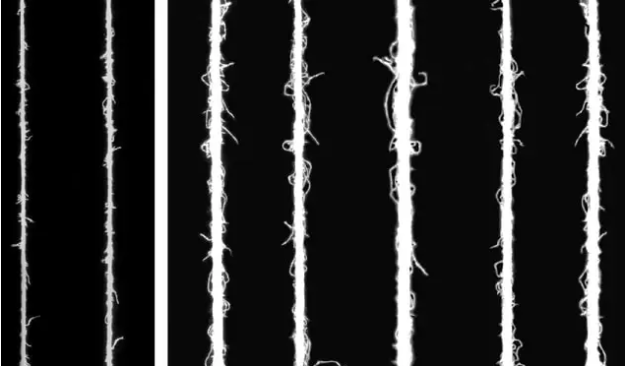
Yarn evenness is one of the most important quality parameters that buyers never see — but it directly affects the appearance, feel, and durability of finished knitted products. Uneven yarn creates visible stripes, weak spots, and inconsistent dye uptake.
This guide explains yarn evenness testing, Uster statistics, and how to interpret test reports. For a complete quality framework, see our Ultimate Guide to Quality for Knitted Scarves & Beanies. For yarn count guidance, see our Yarn Count (Nm) Explained guide.
1. What Is Yarn Evenness?
Yarn evenness refers to the consistency of yarn thickness along its length. Perfectly even yarn would have exactly the same thickness at every point — but in reality, all yarn has some variation.
Why evenness matters:
- Uneven yarn creates visible stripes (barriness) in finished fabric
- Thin spots are weak points — prone to breaking during knitting or in use
- Thick spots create slubs — visible as raised areas on fabric surface
- Uneven yarn takes dye unevenly — creates color variation in solid-colored products
For buyers: Yarn evenness is the foundation of fabric quality. No finishing process can fix uneven yarn.
For quality expectations, see our Ultimate Guide to Quality for Knitted Scarves & Beanies.
2. The Uster Evenness Tester
The Uster Evenness Tester is the industry standard instrument for measuring yarn evenness. It is manufactured by Uster Technologies, a Swiss company, and is used by quality-conscious spinning mills worldwide.
How it works: The tester passes yarn through a capacitive sensor at high speed (up to 800 m/min). The sensor measures mass variation along the yarn length, generating a CV% (coefficient of variation) value.
Key Measurements
- CV% (Coefficient of Variation): The primary measure of evenness. Lower = more even.
- Thin places (-50%): Number of thin spots per 1,000 meters (count of places where thickness drops by 50%)
- Thick places (+50%): Number of thick spots per 1,000 meters
- Neps (+200%): Number of small fiber tangles per 1,000 meters
- Spectrogram: Graphical representation of periodic variations
3. Uster Statistics: Quality Levels
Uster publishes global benchmark statistics (Uster Statistics) that allow mills to compare their yarn quality against worldwide percentiles. The lower the percentile, the better the quality.
Quality Level Interpretation
- 5% level: Excellent — top 5% of global production
- 25% level: Good — above average
- 50% level: Average — acceptable for standard products
- 75% level: Below average — visible defects likely
- 95% level: Poor — significant defects guaranteed
Typical CV% Targets by Fiber
- Cashmere (Nm 60/2): CV% 14-16% (good), <14% (excellent)
- Merino wool (Nm 48/2): CV% 13-15% (good), <13% (excellent)
- Cotton (Ne 40/1): CV% 15-17% (good), <15% (excellent)
- Acrylic (Nm 28/2): CV% 12-14% (good), <12% (excellent)
- Recycled polyester (Nm 50/2): CV% 11-13% (good), <11% (excellent)
For yarn count guidance, see our Yarn Count (Nm) Explained guide.
4. Interpreting an Uster Test Report
Sample Report Interpretation
USTER TEST REPORT
Yarn specification: 100% Cashmere, Nm 60/2
Test speed: 400 m/min
Test duration: 2.5 minutes (1,000 m tested)

RESULTS:
CV%: 15.2
Thin places (-50%): 8 / 1,000m
Thick places (+50%): 45 / 1,000m
Neps (+200%): 120 / 1,000m

INTERPRETATION:
CV% 15.2 = Good (between 25-50% percentile)
Thin places: Moderate (acceptable)
Thick places: High (risk of visible slubs)
Neps: High (risk of pilling and surface defects)

RECOMMENDATION: Investigate thick places and neps. May require raw material or spinning process improvement.
What Acceptable Looks Like
- CV% within target range for fiber type and count
- Thin places: <20 per 1,000m
- Thick places: <50 per 1,000m
- Neps: <150 per 1,000m
What Unacceptable Looks Like
- CV% above target range — visible stripes in finished fabric
- Thin places >50 per 1,000m — frequent yarn breaks during knitting
- Thick places >150 per 1,000m — visible slubs on fabric surface
- Neps >300 per 1,000m — pilling and surface unevenness
For pilling guidance, see our Knitted Scarf Pilling Guide.
5. How Yarn Evenness Affects Finished Products
Visible Stripes (Barriness)
- Cause: High CV% (periodic thickness variation)
- Appearance: Horizontal stripes across the fabric, visible in solid colors
- Prevention: Specify maximum CV% in yarn purchase contract
Weak Spots & Yarn Breaks
- Cause: Thin places
- Appearance: Holes or weak areas; yarn breaks during knitting
- Prevention: Specify maximum thin places per 1,000m
Slubs & Surface Irregularities
- Cause: Thick places
- Appearance: Raised areas on fabric surface, visible as small bumps
- Prevention: Specify maximum thick places per 1,000m
Uneven Dye Uptake
- Cause: Mass variation (thick and thin places take dye differently)
- Appearance: Lighter and darker areas in solid colors
- Prevention: Specify CV% and inspect dye uptake on test samples
For color guidance, see our Color Fastness Guide.
6. How to Specify Yarn Evenness in Your Purchase Order
Complete Yarn Specification Example
YARN QUALITY SPECIFICATION
- Fiber: 100% Grade A Cashmere
- Yarn count: Nm 60/2
- Uster CV%: ≤15% (25% percentile or better)
- Thin places (-50%): ≤20 per 1,000m
- Thick places (+50%): ≤50 per 1,000m
- Neps (+200%): ≤150 per 1,000m
- Test method: Uster Tester 6 (or equivalent)
- Test report required for each yarn batch
Questions to Ask Your Yarn Supplier
- Can you provide Uster test reports for each yarn batch?
- What is your typical CV% for this yarn specification?
- What percentile does your yarn achieve in Uster Statistics?
- Do you have an electronic yarn clearer on your winding machines?
- What is your yarn break rate during knitting?
For supplier evaluation, see our 5 Red Flags When Evaluating a Knitting Factory.
7. Electronic Yarn Clearers
Electronic yarn clearers are devices installed on winding machines that detect and remove thick places, thin places, and neps during yarn production.
Benefits:
- Removes defects before yarn reaches knitting machines
- Reduces yarn breaks during knitting
- Improves finished fabric appearance
- Consistent quality across all yarn batches
What to ask: "Do you have electronic yarn clearers on your winding machines? Are they calibrated regularly?"
8. Yarn Evenness and Knitting Performance
Uneven yarn directly affects knitting efficiency and finished product quality.
Impact on Knitting
- High CV%: Visible stripes, uneven fabric appearance
- Thin places: Yarn breaks during knitting → production stops, lower efficiency
- Thick places: Slubs → visible defects, may be rejected in final inspection
- Neps: Surface defects → pilling risk, poor appearance
Cost Impact
- Yarn breaks reduce knitting machine efficiency by 5-15%
- Defective fabric from uneven yarn may need to be rejected (5-10% waste)
- Quality claims from buyers for visible stripes or slubs
For cost analysis, see our Cost Breakdown Guide.
9. Buyer's Yarn Quality Checklist
- Specify Uster CV% maximum in yarn purchase contract
- Request Uster test report for each yarn batch
- Ask for Uster Statistics percentile (aim for 25% or better)
- Verify electronic yarn clearers are used
- Test knit a sample before bulk production
10. Questions to Ask Your Yarn Supplier
- Do you have Uster testing equipment? Can you provide test reports?
- What is your target CV% for this yarn?
- What Uster Statistics percentile does your yarn typically achieve?
- Do you use electronic yarn clearers on your winding machines?
- What is your typical yarn break rate during knitting?
For supplier evaluation, see our 5 Red Flags When Evaluating a Knitting Factory.
11. Related Resources
- The Ultimate Guide to Quality for Knitted Scarves & Beanies
- Yarn Count (Nm) Explained
- Knitted Scarf Pilling Guide
- Color Fastness Guide
- Fabric Defect Identification Guide
- Cost Breakdown Guide
- The Complete Sourcing Guide for Knitted Scarves & Beanies
This guide is part of our Quality Guide series.